In short
- An implant needs a minimum volume of bone to be stable.
- When bone is missing, it's regenerated with a graft before or during the implant.
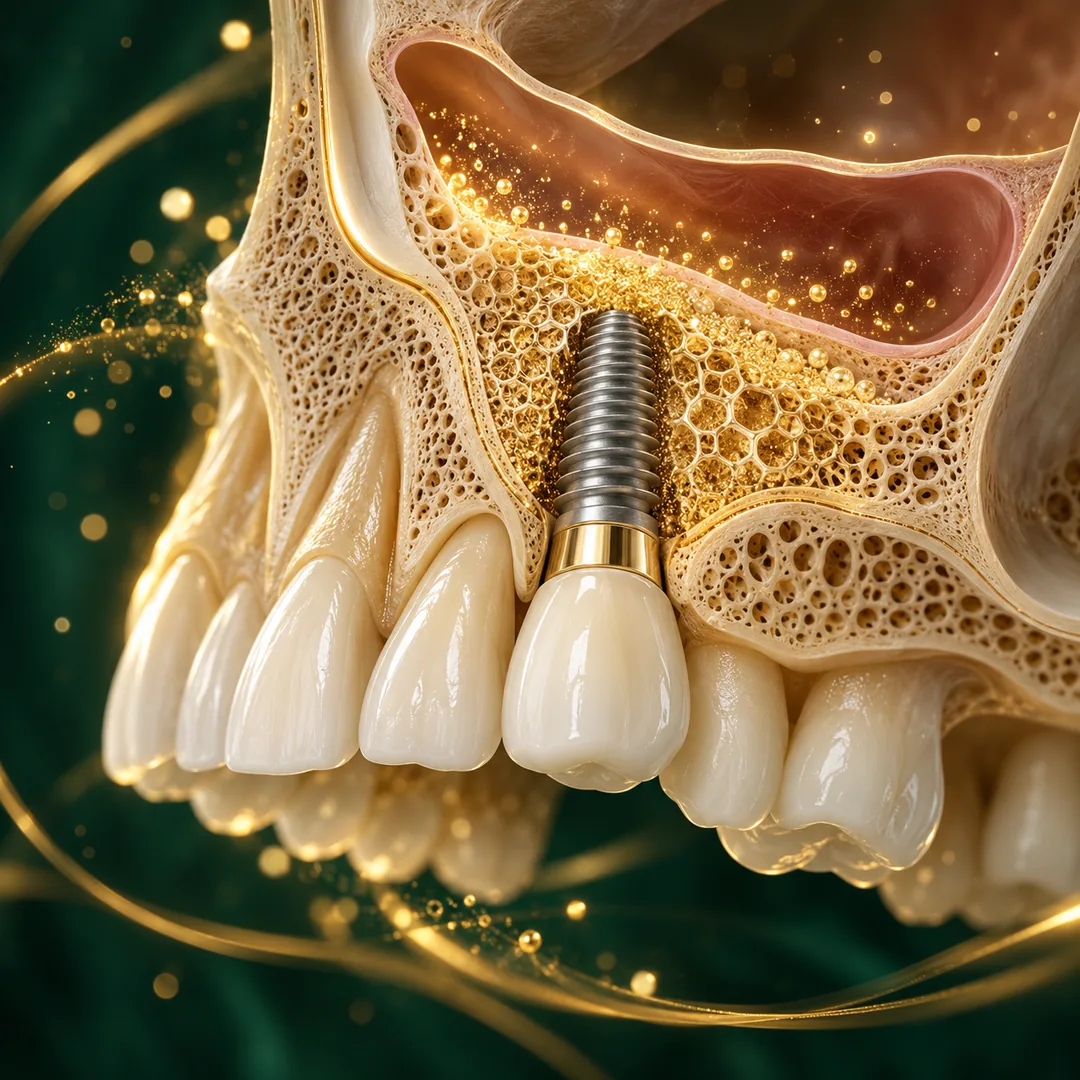
- In the upper molar area, the maxillary sinus sometimes requires a “sinus lift”.
- It's very common after losing a tooth long ago: the bone resorbs.
- With good planning, most “no bone” cases can indeed be restored.
01Why do I “have no bone”?
When a tooth is lost and time passes, the bone that held it gradually resorbs, because it no longer receives stimulus. Bone can also be missing from past infections, gum disease or your own anatomy.
For an implant to be firm and last, it needs enough bone around it. If there isn't, it's regenerated first.
02What is a bone graft?
A bone graft means adding material that stimulates your body to form new bone where it's missing. Over time, that material integrates and becomes your own bone, able to support an implant.
Sometimes the graft is done at the same time as placing the implant, other times a few months earlier, depending on how much bone is missing. A 3D X-ray defines the plan.
“You have no bone” almost never means “it can't be done”. It means we build the foundation first so the implant lasts.
03What is a sinus lift?
In the upper molar area, the maxillary sinus sits above the bone. If little bone height remains after losing those teeth, a sinus lift is performed: the sinus membrane is carefully lifted and graft is placed underneath to gain the height the implant needs.
It sounds complex, but it's a highly standardized procedure within maxillofacial surgery, under local anesthesia and with good recovery.
04What's the process and recovery?
It all starts with an assessment and a 3D X-ray to measure exactly how much bone you have and how much is missing. That decides whether the graft goes before or with the implant.
Recovery is usually more manageable than people imagine: manageable discomfort, simple care and a waiting time for the bone to mature before the final tooth. I'll be with you at every stage.
·Frequently asked questions
If I don't have enough bone, can I still get an implant?
In most cases yes, but the bone must first be regenerated with a graft or a sinus lift. With good planning, many “no bone” cases end up successfully restored.
Does a bone graft or sinus lift hurt?
They're done under local anesthesia, with no pain during the procedure. Afterwards there's manageable discomfort with simple instructions, usually less than people expect.
How long between the graft and the implant?
It depends on the case. Sometimes the graft and implant go together; other times the bone needs a few months to mature first. The 3D X-ray defines it.
Why did I lose bone if the tooth was removed years ago?
It's normal: without the tooth, the bone stops receiving stimulus and resorbs over time. That's why the longer a tooth is left unreplaced, the more often a graft is needed.
Who does bone grafts and sinus lifts in Cancún?
An oral and maxillofacial surgeon, a specialist in bone regeneration and in the relationship with the maxillary sinus. In Cancún you can be assessed by Dra. Jessica López.
Book your assessment in Cancún
Every case is different and deserves an assessment. Message me on WhatsApp: I reply personally and guide you with no obligation.
Book on WhatsApp