Relieve jaw pain

Temporomandibular joint (TMJ)

Jaw pain, clicking when you open your mouth or wear from bruxism can affect your daily life. As a maxillofacial surgeon, I diagnose the origin of the TMJ problem and propose the right treatment for each case.

What are TMJ disorders?

The temporomandibular joint connects the jaw to the skull. When it is altered, discomfort appears that is worth assessing:

  • Pain in the jaw, ear or when chewing
  • Clicking or locking when opening or closing the mouth
  • Frequent headaches or facial tension
  • Tooth wear or clenching (bruxism)
  • Difficulty opening the mouth fully
TMJ pain and bruxism have a solution once their origin is understood. You don't have to get used to living with discomfort.
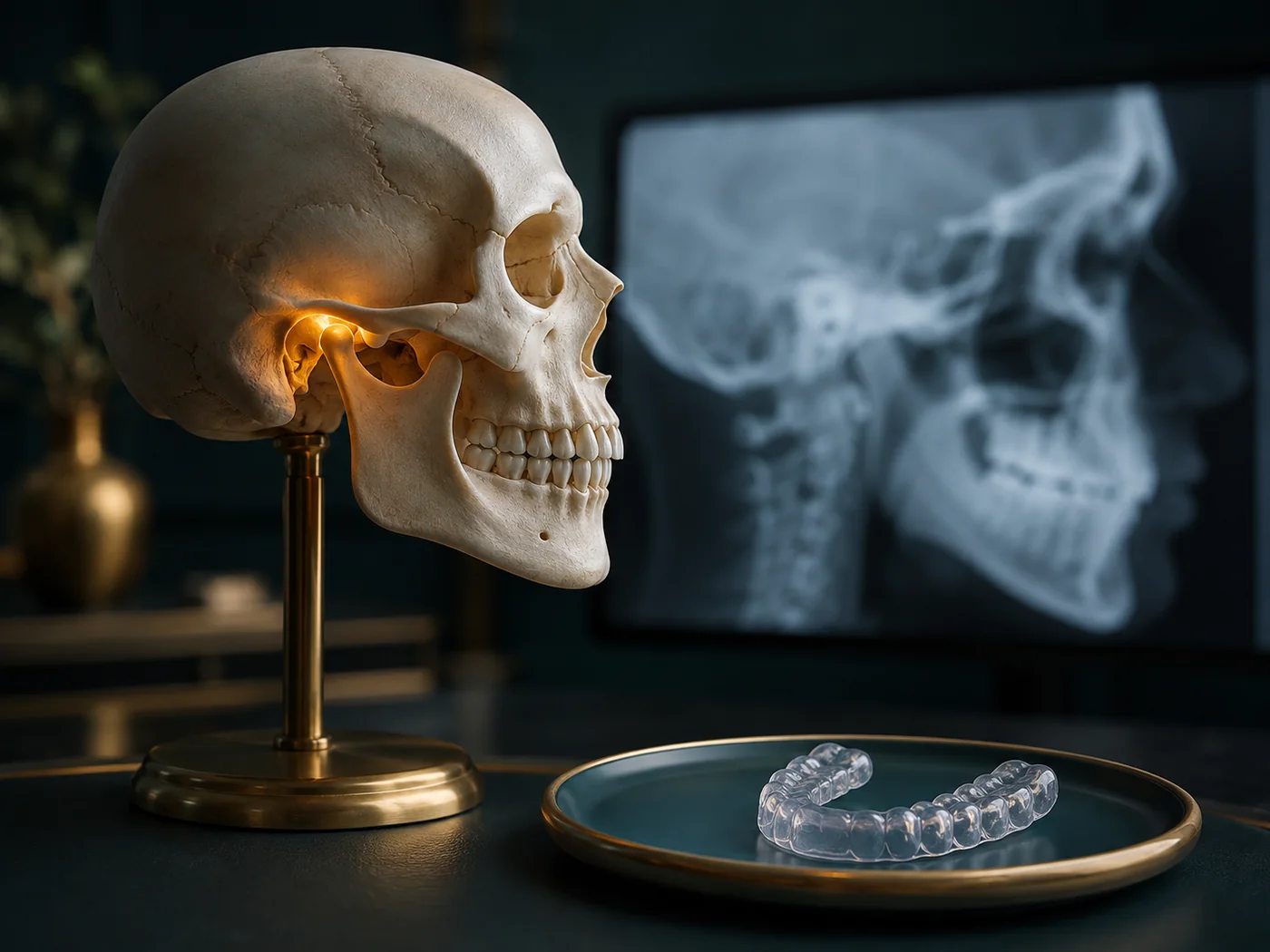
Skull highlighting the temporomandibular joint next to a lateral X-ray and a splint
How I do it

Your process, step by step

Diagnosis

I assess the joint, your bite and your habits to identify the origin of the problem.

Treatment plan

I propose the right management: from splints and therapy to specific procedures depending on the case.

Follow-up

We follow up to control pain and protect the joint long term.

Recovery. Many TMJ cases improve with well-indicated conservative management. What matters is a correct diagnosis, so we don't treat blindly.
Frequently asked questions

Temporomandibular joint disorders

Can bruxism be treated?

Yes. With a proper diagnosis we can protect your teeth and relieve tension with the right management for your case.

Is surgery always needed for TMJ?

No. Many cases resolve with conservative management. Surgery is reserved for specific situations.

Is clicking dangerous?

Not always, but it's worth assessing to prevent the problem from progressing.

Can headaches come from the jaw?

Yes, TMJ tension and bruxism can cause headaches, which is why we assess the whole picture.

Take the first step

Book your consultation in Cancún

Clear diagnosis and a human touch. Message me and let's solve your case.

Book on WhatsApp