In short
- An impacted tooth is trapped in the bone or gum and didn't erupt.
- The canine is the second most commonly impacted tooth, after the wisdom tooth.
- It can damage the roots of neighboring teeth without early symptoms.
- Treatment can be removal, or exposure to guide it with orthodontics.
- It's always planned with an X-ray to operate safely.
01What is an impacted tooth?
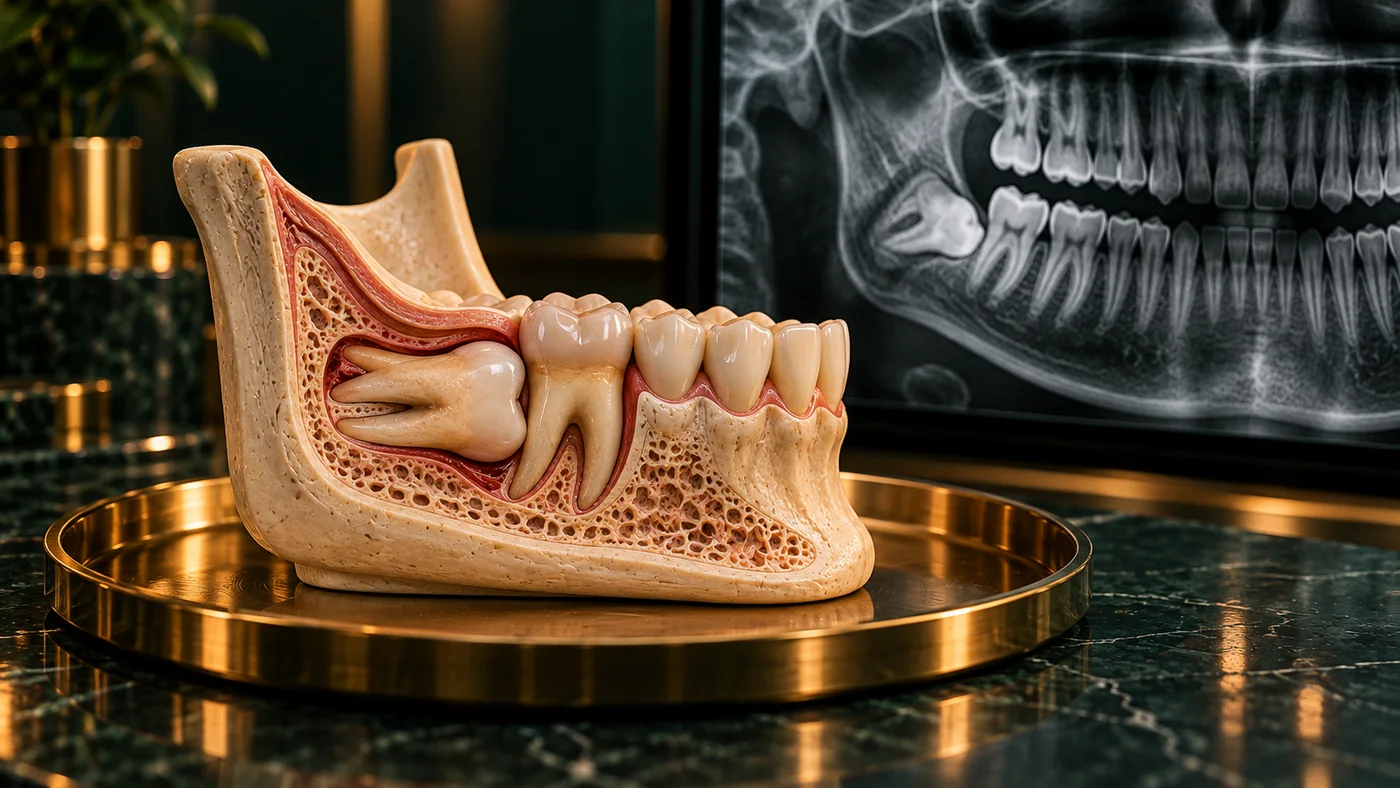
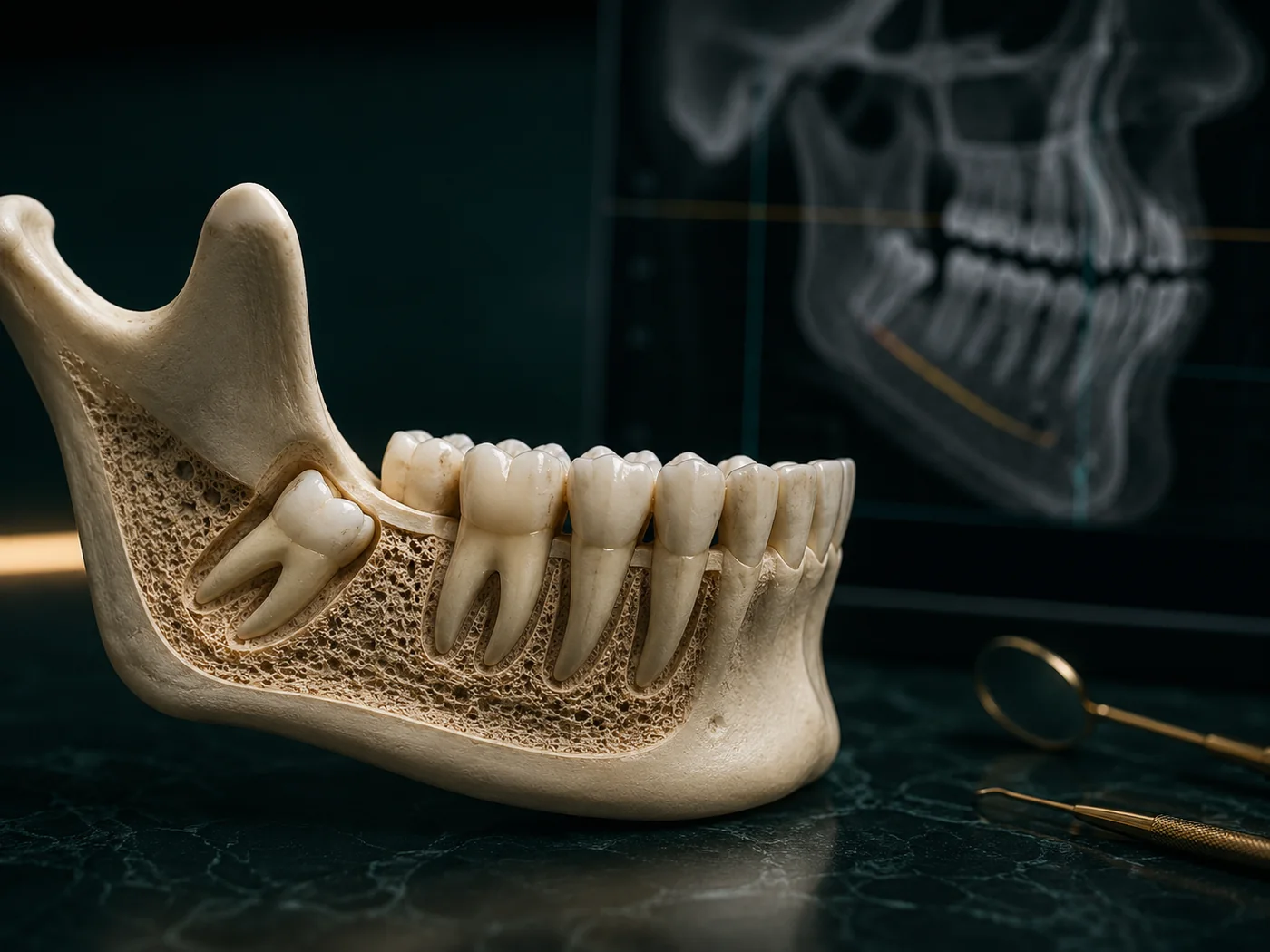
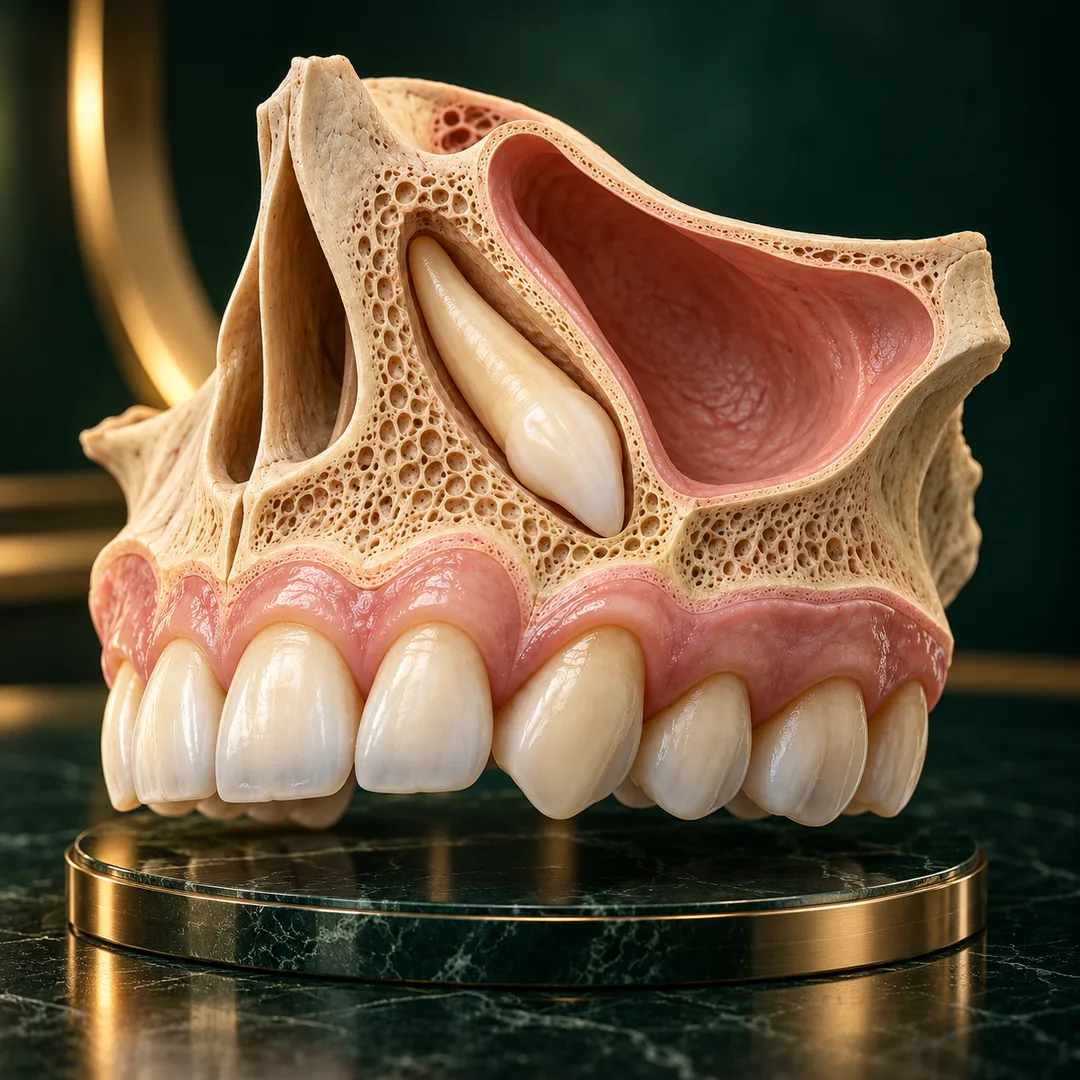
An impacted tooth is one that can't erupt and remains within the bone or covered by gum. The best known is the impacted wisdom tooth, but the upper canine is also frequently impacted.
The usual cause is lack of space in the arch or a wrong orientation as the tooth develops.
02Why does treating it matter?
An impacted tooth can push on or resorb the roots of neighboring teeth, form cysts or become infected —often without early symptoms. Detected in time, that damage is prevented.
With the canine, it's also a key tooth for the bite and the smile, so recovering it is usually worthwhile.
An impacted tooth can quietly harm its neighbors. Detecting it in time is what allows a smooth solution.
03How is it detected?
It's often found on a routine X-ray, before causing trouble. That's why imaging assessments are so useful: they show the tooth's exact position and its relationship to nearby structures.
Radiographic planning is what defines the best plan for each case.
04What is the treatment?
There are two paths depending on the case: remove the impacted tooth when it isn't functional or is causing damage, or surgically expose it so the orthodontist can guide it into place. Both are part of specialized oral surgery.
It's all done under local anesthesia with prior planning, working together with your orthodontist when the aim is to keep the tooth.
·Frequently asked questions
Is an impacted tooth always removed?
No. Sometimes it's removed and other times surgically exposed so orthodontics can bring it into place, especially the canine. The X-ray defines the best plan.
Why does the canine get impacted?
Usually from lack of space or a wrong position during development. It's the second most commonly impacted tooth, after the wisdom tooth.
Is it dangerous to leave an impacted tooth?
It can damage neighboring roots, form cysts or become infected, sometimes without symptoms. That's why it's worth assessing even if it doesn't hurt.
Does the procedure hurt?
It's done under local anesthesia, with no pain during the procedure, and instructions for a comfortable recovery.
Who treats an impacted tooth in Cancún?
An oral and maxillofacial surgeon, who plans the case with an X-ray and works with your orthodontist. In Cancún, with Dra. Jessica López.
Book your assessment in Cancún
Every case is different and deserves an assessment. Message me on WhatsApp: I reply personally and guide you with no obligation.
Book on WhatsApp