In short
- The oral and maxillofacial surgeon is the specialist of the mouth, face and jaw
- They handle everything from impacted wisdom teeth to implants, TMJ and orthognathic surgery
- It is not the same as a general dentist: you go for complexity, not routine
- Cancún has few specialists; choosing well depends on training and planning
01What is an oral and maxillofacial surgeon?
Oral and maxillofacial surgery is the specialty that diagnoses and surgically treats the mouth, jaws, face and related structures. It is one of the most demanding fields in healthcare because it combines dental knowledge with surgical training of the face and neck.
Put simply: while a general dentist cares for and restores your teeth, the maxillofacial surgeon solves the problems that require surgery in and around the mouth — from a wisdom tooth impacted next to the nerve to correcting the bite or rebuilding with implants when bone is missing.
That specialty training is what makes it possible to anticipate risks, protect delicate structures like the dental nerve, and safely operate on the cases others prefer not to touch.
02Which problems it solves
The field is broad. These are the reasons most patients see a maxillofacial surgeon in Cancún:
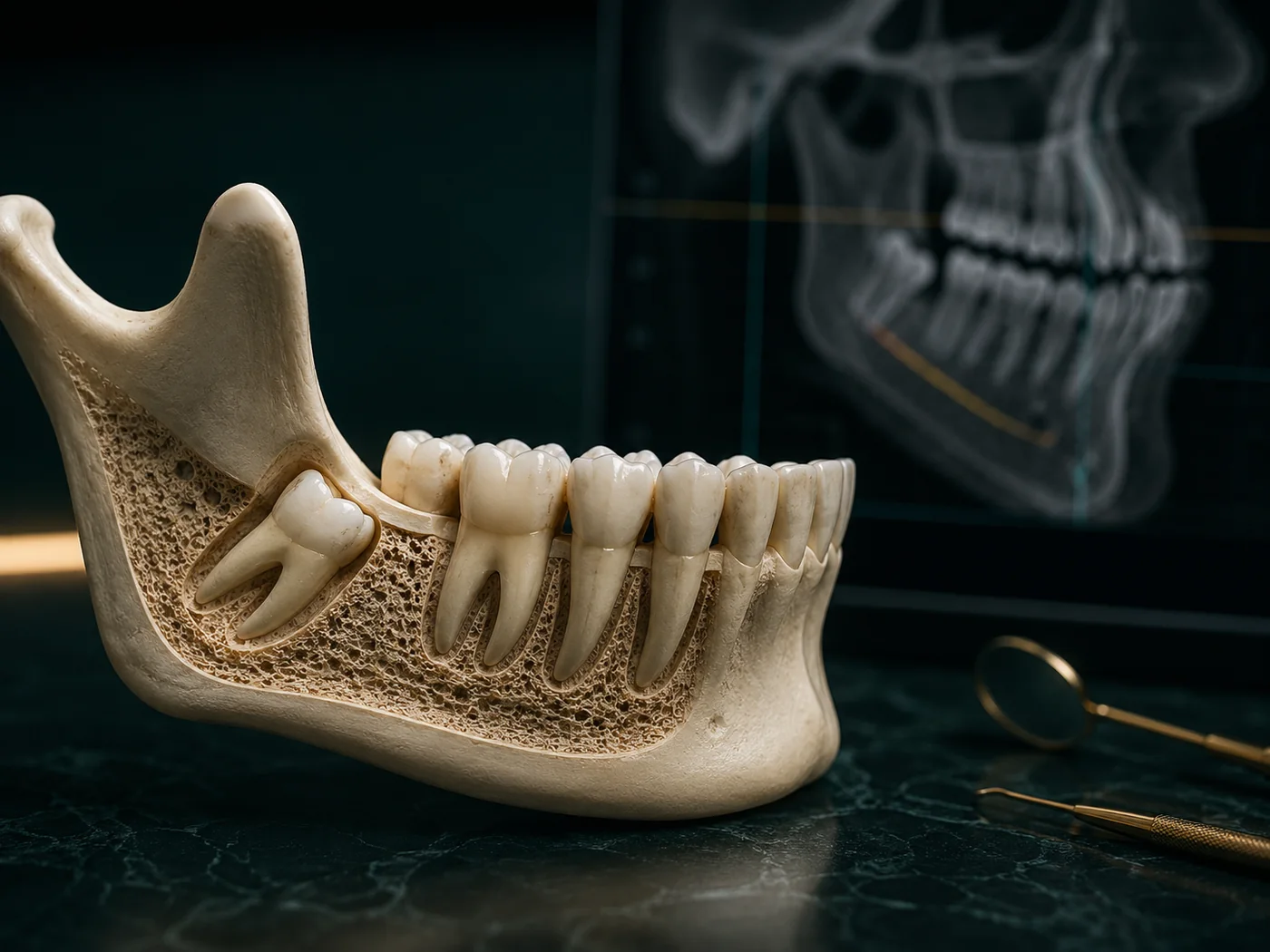
Wisdom teeth and impacted teeth. Removing third molars — especially when impacted, poorly positioned or near the nerve — is a surgical procedure planned with imaging. It is one of the most common reasons for a visit.
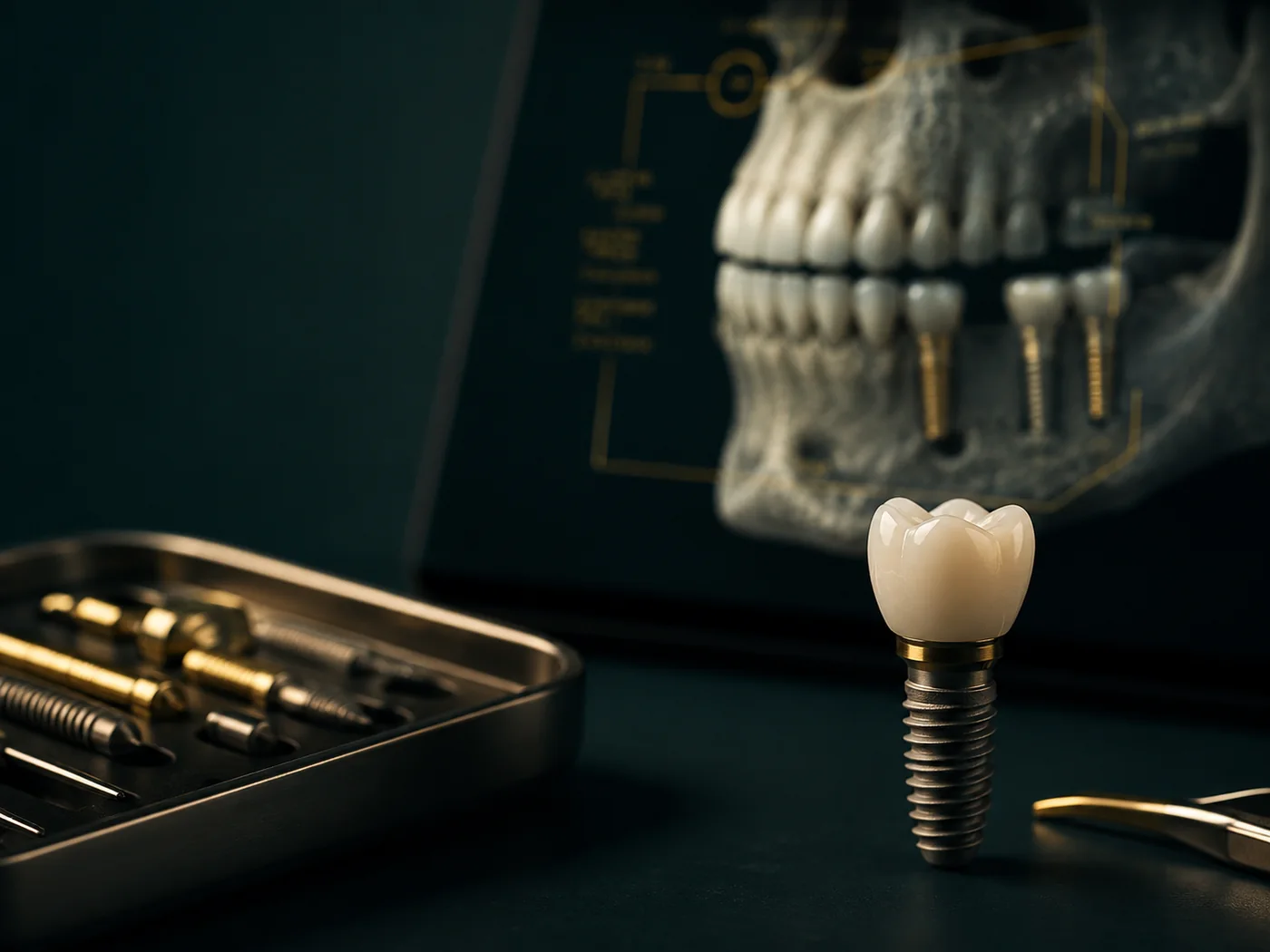
Dental implants and bone regeneration. Replacing missing teeth with implants, even when bone is missing and a graft is needed, is natural territory for the specialty because it involves surgery on the jaw.
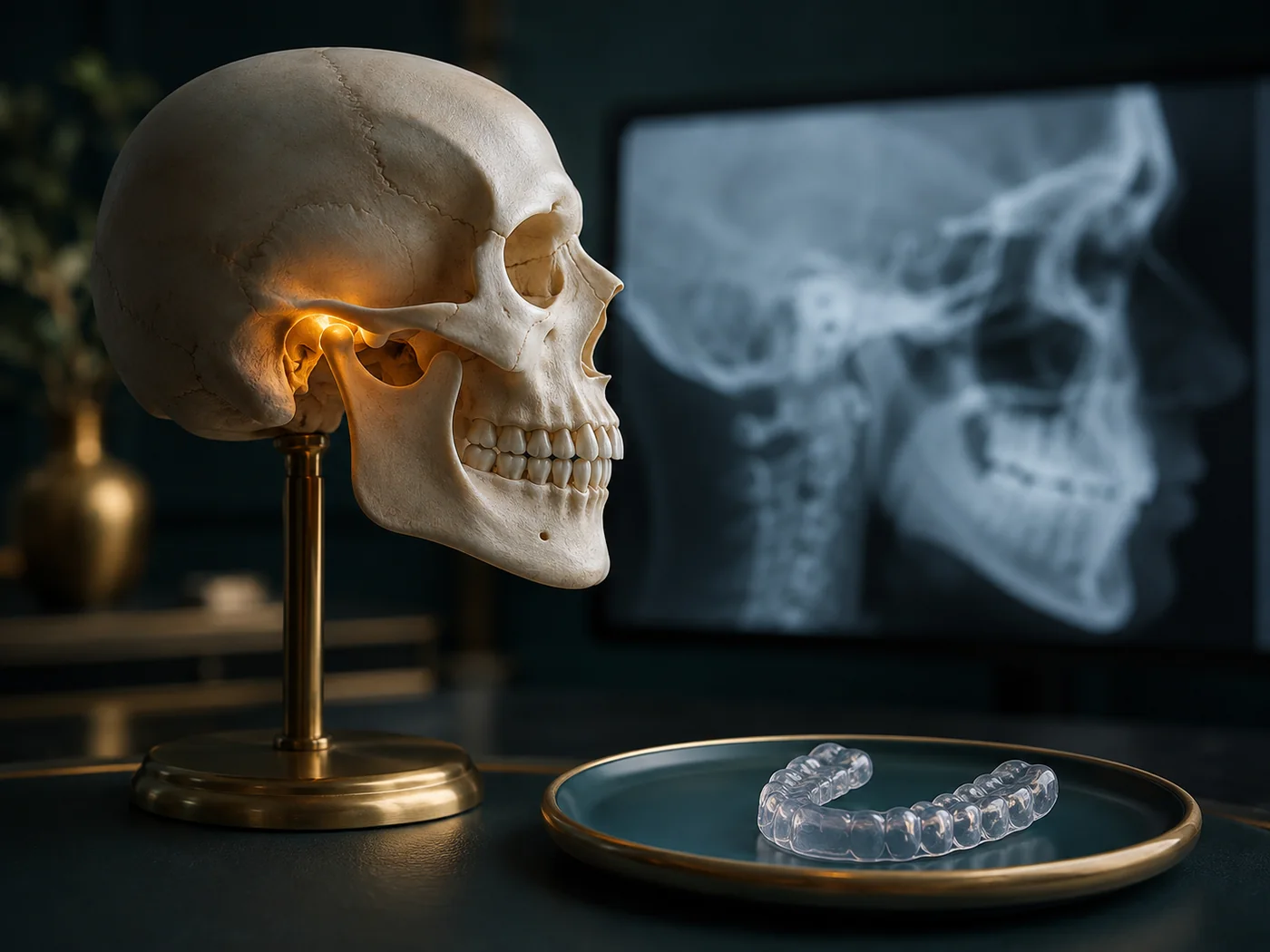
TMJ disorders and bruxism. Jaw pain, clicking, clenching and related headaches are diagnosed and treated here, from night guards to botulinum toxin or, in specific cases, surgery.
Orthognathic surgery. When the bite cannot be fixed with braces alone because the problem lies in the position of the jaws, orthognathic surgery repositions the bones to improve function and facial harmony.
Oral pathology. Assessing and biopsying lesions, cysts and abnormalities of the mouth allows timely diagnosis — critical when a lesion does not heal.
Therapeutic Botox. Medical botulinum toxin, applied by someone who knows facial anatomy, helps with bruxism, masseter hypertrophy, TMJ pain and a gummy smile.
The difference between pulling a tooth and solving a case lies in the surgical judgement that only specialty training provides.
03Maxillofacial surgeon vs. general dentist: who to see?
It is a common question, and the answer is simple: they are complementary. Your general dentist is your first point of contact and handles routine dental care — cleanings, fillings, crowns, orthodontics. The maxillofacial surgeon steps in when surgery is needed or the case is complex.
In fact, many patients are referred by their own dentist precisely for what needs surgical judgement. Going directly to the specialist makes sense when you already know you need a complex extraction, an implant with little bone, relief for persistent jaw pain, or the assessment of a lesion.
The practical rule: for daily care, your dentist; for surgery and complexity, the specialist.
04How to choose a maxillofacial surgeon in Cancún
Cancún and Quintana Roo have few board-qualified maxillofacial surgeons, so it is worth choosing carefully. These are the points I would check:
Verifiable specialty training. Maxillofacial surgery requires years of training after dental school. Ask about the license and background.
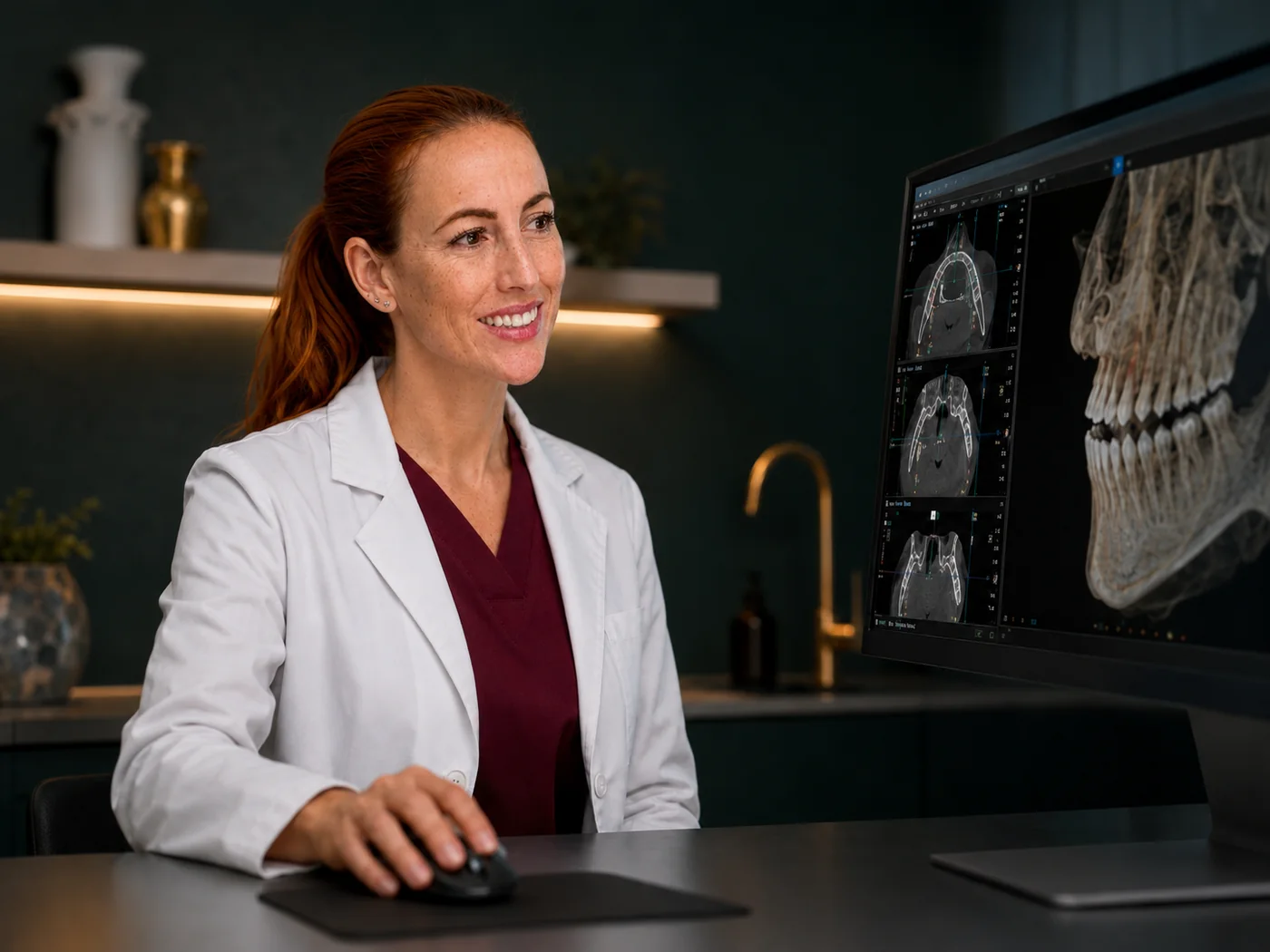
Planning with X-ray or CT. Serious surgery is studied before it is performed. If the imaging is not reviewed, you are operating blind.
Clear explanation. You should understand your diagnosis, your options and what to expect in recovery. Transparency is part of the treatment.
Human care and follow-up. Surgery is stressful; being supported before, during and after matters as much as the technique.
05What an assessment with me looks like
I work with a simple principle: understand first, then treat. In the assessment I study your case with the necessary X-ray or CT, review your history and explain in plain language what is happening and what your options are — no unnecessary jargon, no pressure.
I practice in Cancún, in Torres del Bosque on Av. Nichupté, and I welcome patients from across the region — Playa del Carmen, Chetumal and the Riviera Maya — as well as national and international patients who travel for treatment.
If you have a problem that will not resolve, a tooth you are worried about, or simply want a second opinion with a specialist's judgement, the assessment is the first and most important step.
·Frequently asked questions
What is the difference between a maxillofacial surgeon and a dentist?
The general dentist handles routine dental care; the maxillofacial surgeon solves the surgical and complex problems of the mouth, face and jaw, such as impacted teeth, implants with little bone, TMJ or orthognathic surgery.
When should I see a maxillofacial surgeon in Cancún?
When you have an impacted or painful wisdom tooth, need implants, have persistent jaw pain, a mouth lesion that will not heal, or need your bite corrected with surgery.
Does maxillofacial surgery always mean a hospital?
No. Many procedures, like wisdom teeth or implants, are done in the office under local anesthesia. The assessment defines what is safest for your case.
Do you treat patients from outside Cancún?
Yes. I welcome patients from Playa del Carmen, Chetumal, the Riviera Maya and abroad. We can coordinate your assessment and procedure via WhatsApp.