In short
- Botox relaxes the muscle that folds the skin and forms expression lines
- The most treated areas are the frown lines, forehead and crow's feet
- It also works as prevention: it stops the wrinkle before it sets in
- A natural result depends on who applies it and their knowledge of facial anatomy
01What aesthetic Botox is and how it really works
Botox — botulinum toxin type A — does not "fill" or "stretch" the skin. What it does is temporarily relax the muscle underneath. When that muscle contracts again and again as you make expressions, the skin folds and, over the years, that fold sets in. By relaxing the muscle, the skin stops creasing in that area and the expression line softens or disappears.
That is why Botox is so effective on dynamic wrinkles — the ones that appear when you make expressions, like the frown lines when you're annoyed or the forehead lines when you raise your eyebrows. It is a medical procedure, not just a beauty treatment: it works on specific muscles, with exact doses, and requires knowing very well where to apply it and where not to.
02What it's for: the areas we treat
These are the areas where aesthetic Botox gives the best results:
Frown lines (glabella). The two vertical lines between the eyebrows that give an angry or worried look. It is the signature area of the treatment.
Forehead. The horizontal lines that appear when you raise your eyebrows. Treated with careful dosing so as not to drop the brow or lose expression.
Crow's feet. The lines at the outer corners of the eyes when you smile or squint.
Other fine areas. Bunny lines on the nose, a subtle brow lift, gummy smile, chin dimpling, and neck bands.
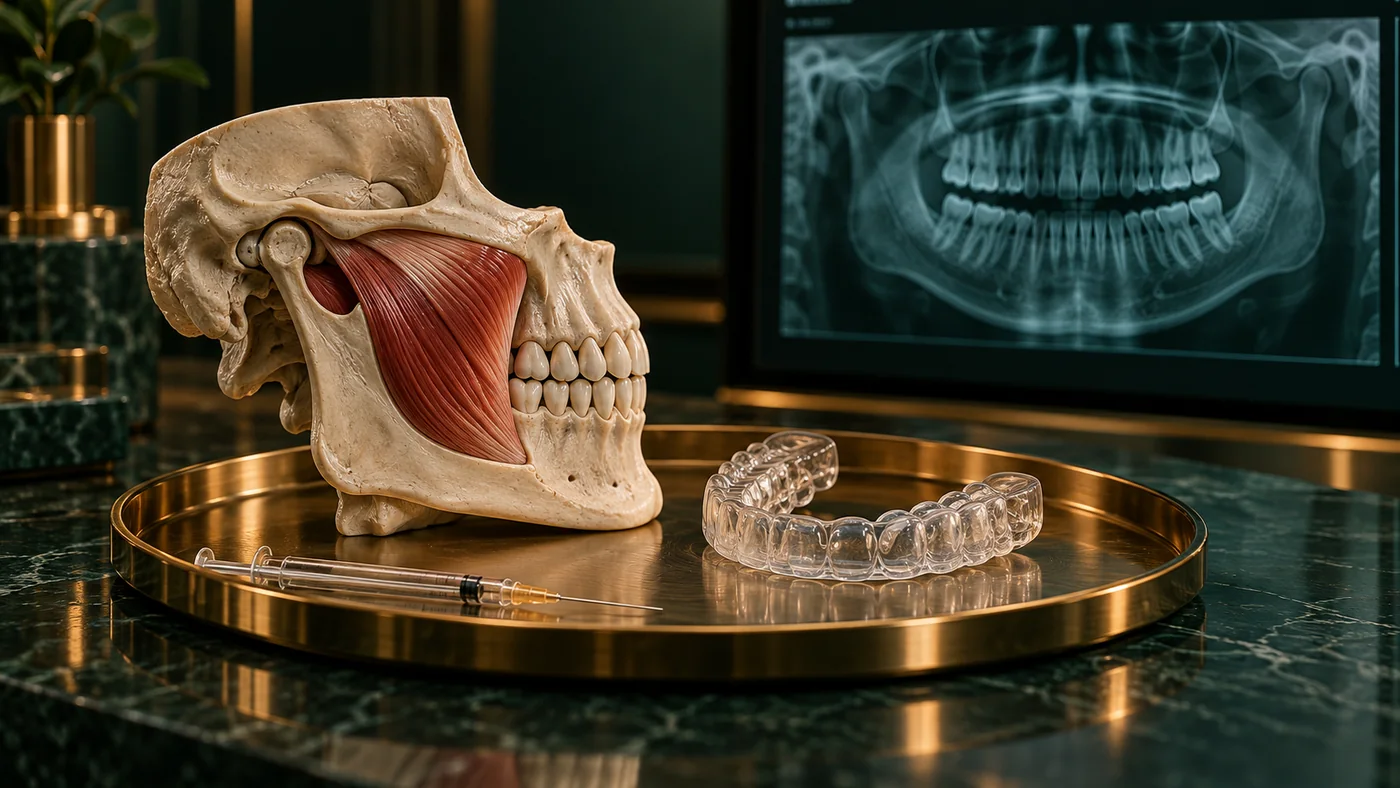
And don't forget the medical uses that share the same tool: bruxism, masseter hypertrophy and jaw-joint (TMJ) pain. Many patients resolve the aesthetic and the functional in the same visit.
03Preventive Botox: getting ahead of the wrinkle
One of the fastest-growing trends is preventive Botox. The idea is simple and logical: if the wrinkle forms because the muscle folds the skin thousands of times, relaxing that muscle before the line sets in prevents it from becoming permanent.
There is no single age to start; it depends on your skin type and the strength of your expressions. Some people benefit from their late twenties if they already notice lines that don't fully disappear when the face relaxes; others, later. The right answer isn't a general rule, but an assessment that looks at your face and your expressions.
The toxin is the same everywhere; what changes is the judgement of the person applying it. Good Botox is the kind no one notices.
04The difference: applied by a facial specialist
Here is what really matters and almost no one tells you: the result of Botox depends enormously on who applies it. The toxin is the same; what changes is the judgement. Knowing exactly which muscle to relax, at which point, with what dose and — just as important — where NOT to touch, is what separates a natural result from a drooping brow, an asymmetric smile or the dreaded "frozen" face.
As an oral and maxillofacial surgeon, my training is precisely the anatomy of the face and the muscles of expression at a surgical level. Applying Botox following a general template is not the same as understanding each person's facial musculature. That knowledge reduces risks and makes the result look good, not "done."
It is the difference between a beauty center and a specialist of the face: both can offer Botox, but not with the same judgement or the same safety.
05A natural result, not "frozen"
The number-one fear of anyone considering Botox for the first time is ending up with a stiff, expressionless face. That image comes from poorly dosed or poorly placed treatments, not from Botox itself.
My philosophy is less is more: relaxing just enough to soften the wrinkle while keeping your expression. The goal is for you to look rested and natural — for people to notice you look good, not that you "had something done." Good Botox is the kind no one notices.
06What to expect: procedure, duration and safety
The application takes a few minutes, with very fine needles and minimal discomfort. It requires no downtime: you can get back to your day with simple instructions.
The effect starts to show in 3 to 7 days and settles at two weeks. It lasts, on average, 3 to 6 months, depending on the area and your muscle. It is a safe treatment when performed by a professional with anatomical knowledge and the right product; it is also temporary, so the result is always adjustable.
I practice in Cancún, in Torres del Bosque on Av. Nichupté. The first step is an assessment: we look at your face, your expressions and your goal, and I honestly tell you what's right — and what isn't — for your case.
·Frequently asked questions
At what age should I start with Botox?
There is no single age. It depends on your skin and the strength of your expressions. If you already notice expression lines that don't fully fade when your face relaxes, it's a good time to assess it. We define it in the consultation by looking at your face.
Will I look "frozen"?
No, when it's dosed and placed well. My approach is to preserve your expression: relaxing just enough to soften the wrinkle. The goal is a natural result that doesn't show you had Botox.
Does it hurt?
Very little. Very fine needles are used and the procedure takes a few minutes. Most describe it as a small pinch.
How long does it last?
Between 3 and 6 months depending on the area and your muscle. With regular sessions, the muscle relaxes and many patients space them out further over time.
Is it safe?
Yes, it is a safe medical procedure when performed by a professional who knows facial anatomy and uses the right product. It is temporary, so the result is always adjustable.
How much does aesthetic Botox cost?
It depends on the areas to treat and the amount of product your case needs. In the assessment I give you a clear plan with its cost, no surprises. Message me on WhatsApp for guidance.