In short
- Bruxism is clenching or grinding, often at night and unnoticed
- Botox relaxes the masseter — the clenching muscle — reducing pain and wear
- The effect lasts 3 to 6 months and is often combined with a night guard
- It should be applied by someone who knows facial anatomy, for safety and results
01What bruxism is and why it matters
Bruxism is the involuntary habit of clenching or grinding your teeth. It happens mostly at night, so many people do not know they have it until the consequences appear: worn or sensitive teeth, jaw pain on waking, headaches, and even joint clicking.
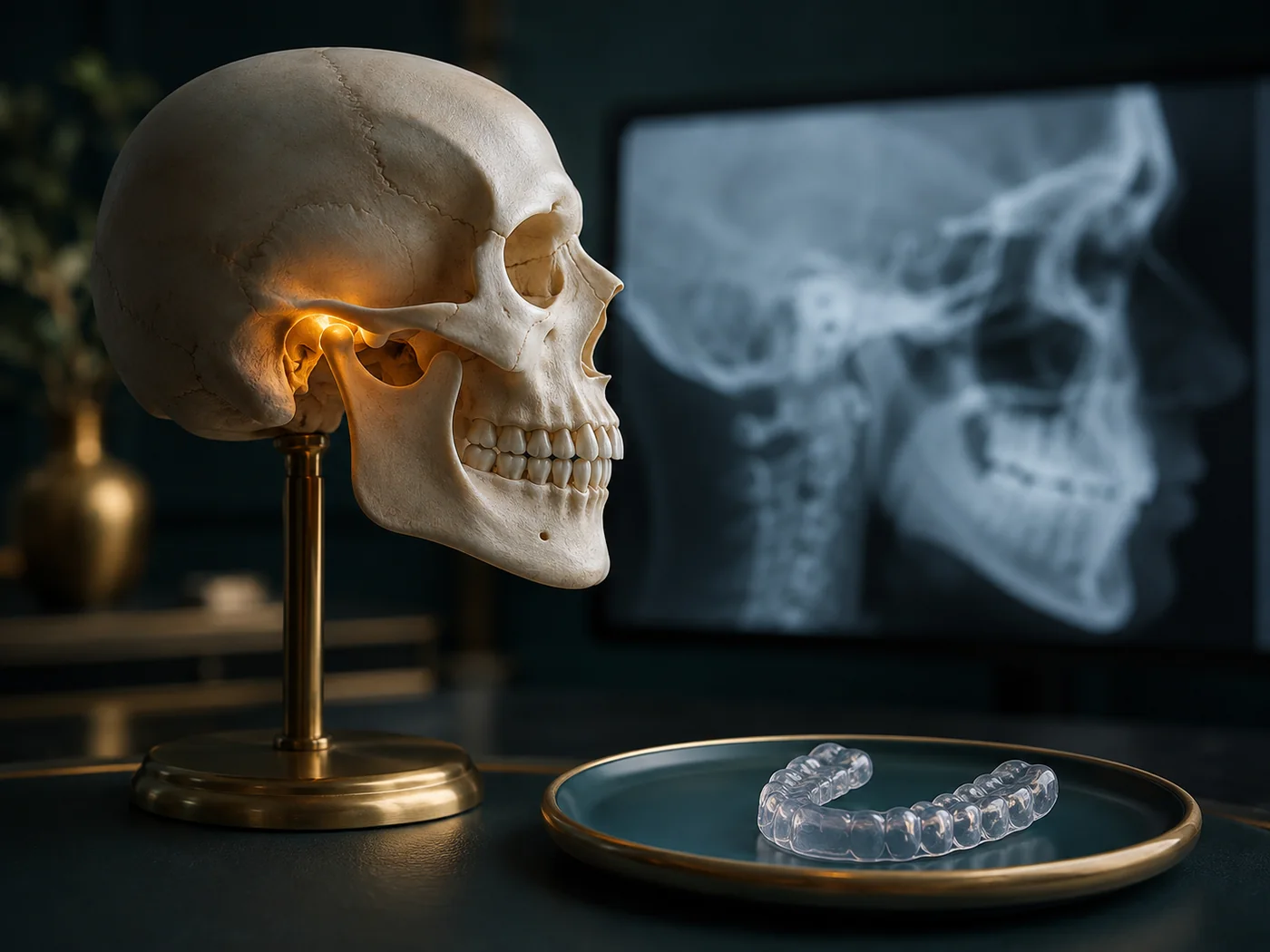
Behind it there is usually a mix of stress, bite issues and muscle tension. The lead actor is the masseter, the muscle that closes the jaw: in bruxism it overworks and over-develops, which perpetuates the pain and, over time, widens the contour of the face.
02Why Botox works for bruxism
Botulinum toxin type A temporarily relaxes the muscle where it is applied. Placed in the masseters, it reduces how hard you clench without taking away your ability to chew. As that force drops, tooth wear decreases, jaw pain eases and associated tension headaches relax.
It is a well-documented medical use in the maxillofacial and dental literature. It is not a cosmetic treatment in disguise: it is a way to protect your teeth and joint when a night guard alone is not enough.
As an added benefit, when an over-developed masseter relaxes, the jawline refines naturally over the following weeks. Function and aesthetics, in the same procedure.
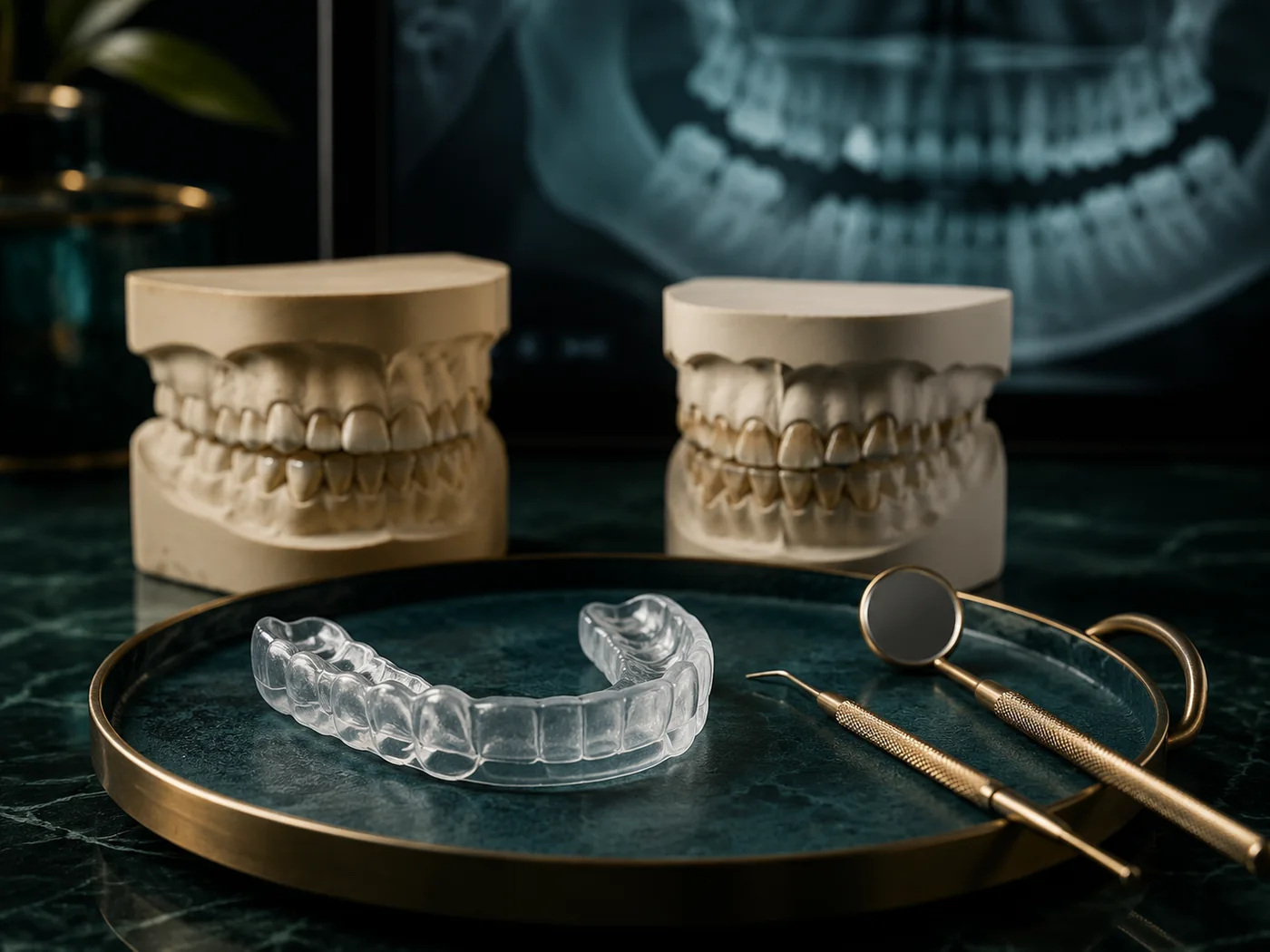
The night guard protects your teeth from wear; Botox reduces the force that causes it. Together, they solve the problem at its root.
03What the treatment looks like
First I assess your case: I review your bite, muscles and symptoms and rule out other causes of TMJ pain. If Botox is indicated, I apply it at the exact points of each masseter with a precise technique and a personalized dose. It is a few-minute procedure, with very fine needles and very well tolerated.
The effect begins to show in 3 to 7 days and settles at two weeks. From there, most patients describe a more relaxed jaw, less pain on waking and fewer clenching episodes.
04How long it lasts and how it is combined
The effect of masseter Botox usually lasts 3 to 6 months. Interestingly, with successive applications many patients manage to space them out further, because the muscle relaxes and the habit loses strength.
The best result is almost always combined: Botox to relax the muscle, a night guard to protect the teeth, and, when needed, TMJ and stress management. It is not about treating an isolated symptom, but the whole picture.
05When it helps and when it does not
Botox for bruxism is a good option when there is jaw pain, marked tooth wear, masseter hypertrophy, or when a night guard has not been enough. It is not for everyone: in the assessment I confirm you are a good candidate and rule out contraindications.
If you recognize the symptoms — waking with a tired jaw, noticing worn teeth, or your partner hearing you grind — it is worth assessing. It is a small change with a big impact on your rest and the health of your teeth.
·Frequently asked questions
Does Botox for bruxism affect chewing or expression?
No. The dose is calculated to reduce excessive clenching force without removing your ability to chew or changing your expression. That is why it matters who applies it.
How long does the effect last?
Between 3 and 6 months depending on your muscle. With successive applications many patients space them out further.
Does it hurt?
Very little. Very fine needles are used and the procedure takes a few minutes. Most describe it as a small pinch.
Does it replace the night guard?
Not always; they are usually complementary. The guard protects the teeth at night and Botox reduces the force that causes wear. We assess based on your case.