In short
- A cyst is a cavity in the bone, almost always benign.
- It's usually found by chance on an X-ray, without pain.
- Many are linked to a damaged or impacted tooth.
- It grows slowly; if neglected, it can weaken bone and move teeth.
- Treatment is to remove it (enucleation) and study it to confirm what it is.
01What is a cyst in the bone?
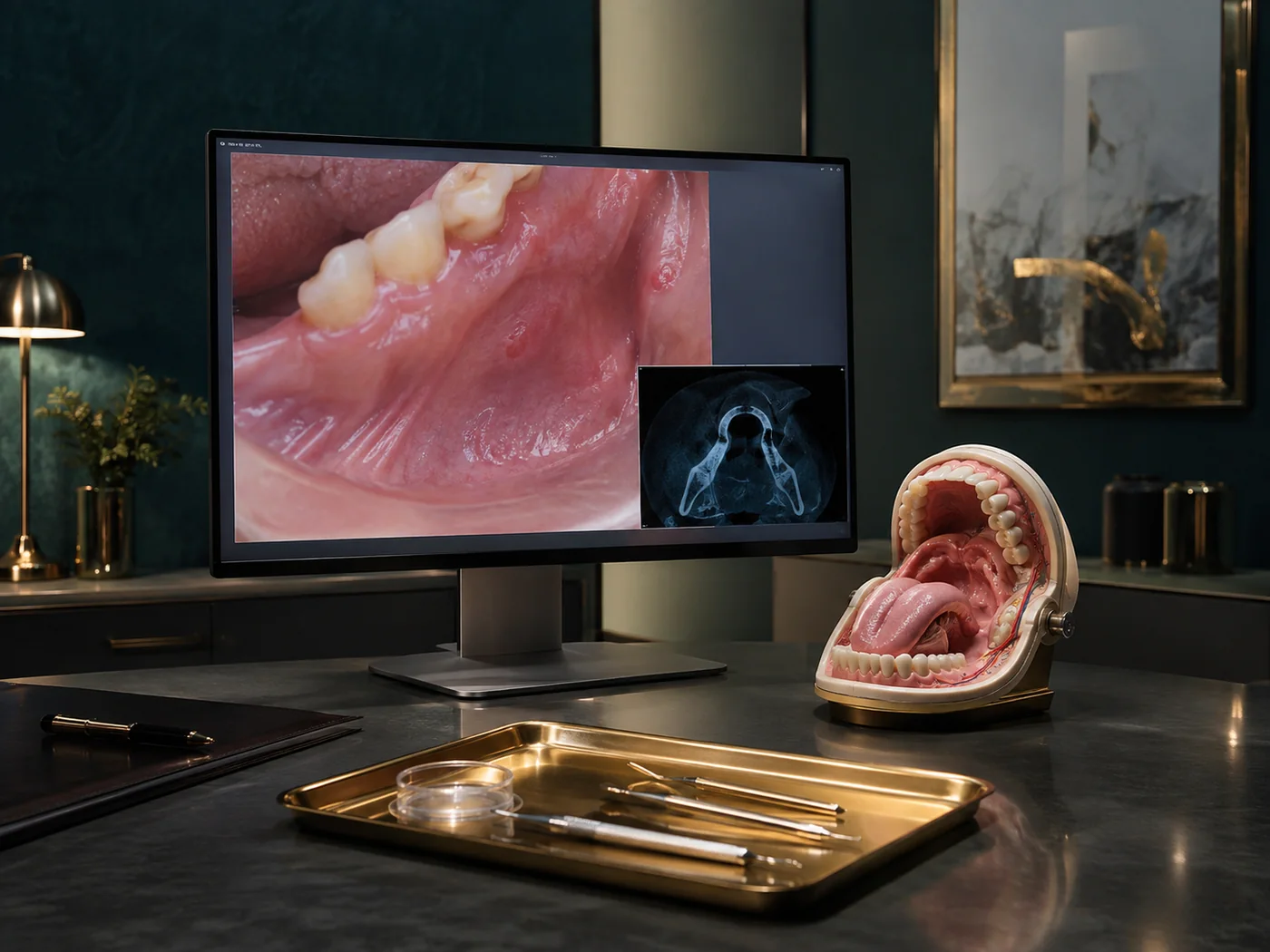
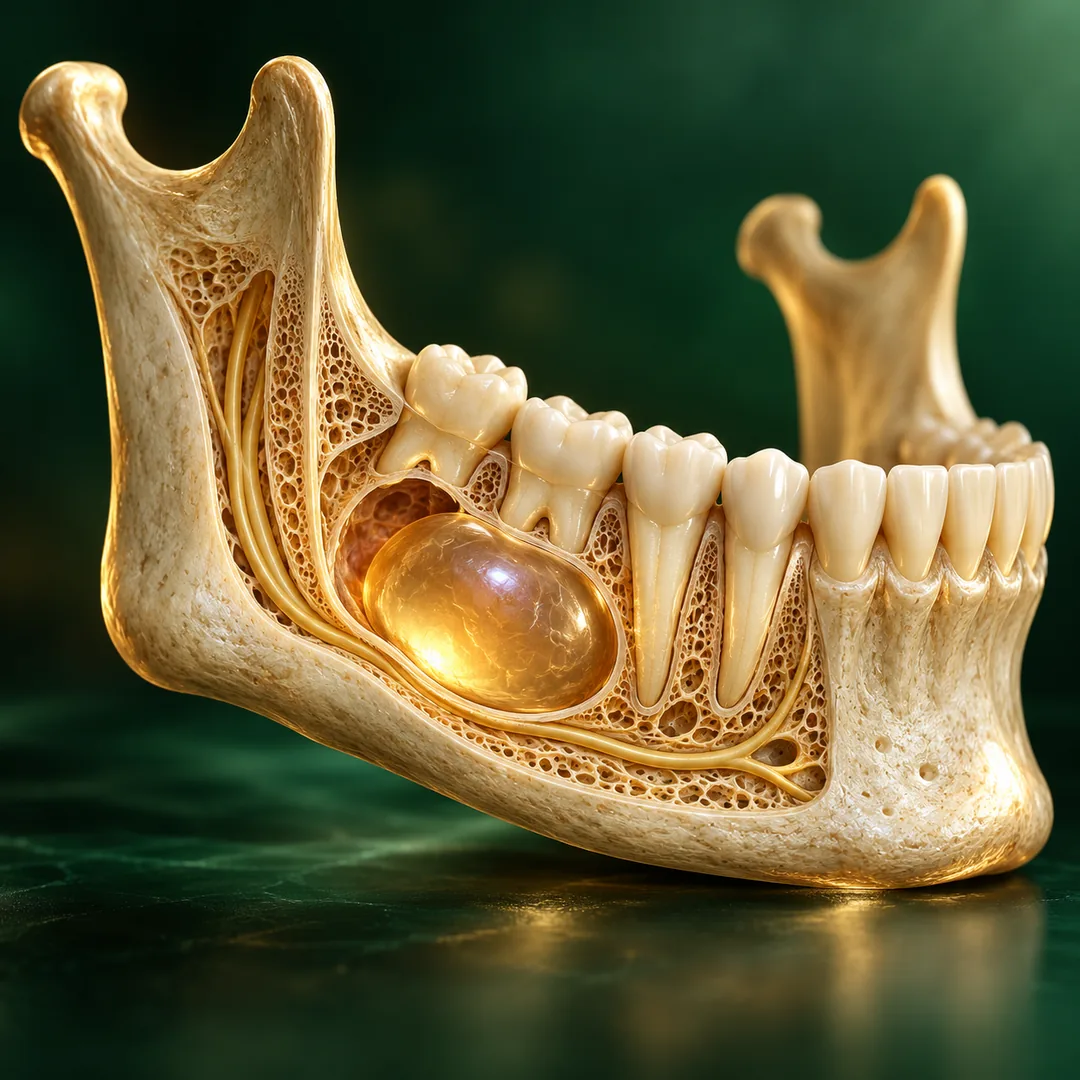
A cyst is a closed cavity, usually with fluid content, that forms within the bone of the upper or lower jaw. Most are benign and slow-growing.
Because they grow slowly and painlessly, many are discovered by chance on an X-ray taken for another reason (orthodontics, an implant, a tooth).
02Why does it appear?
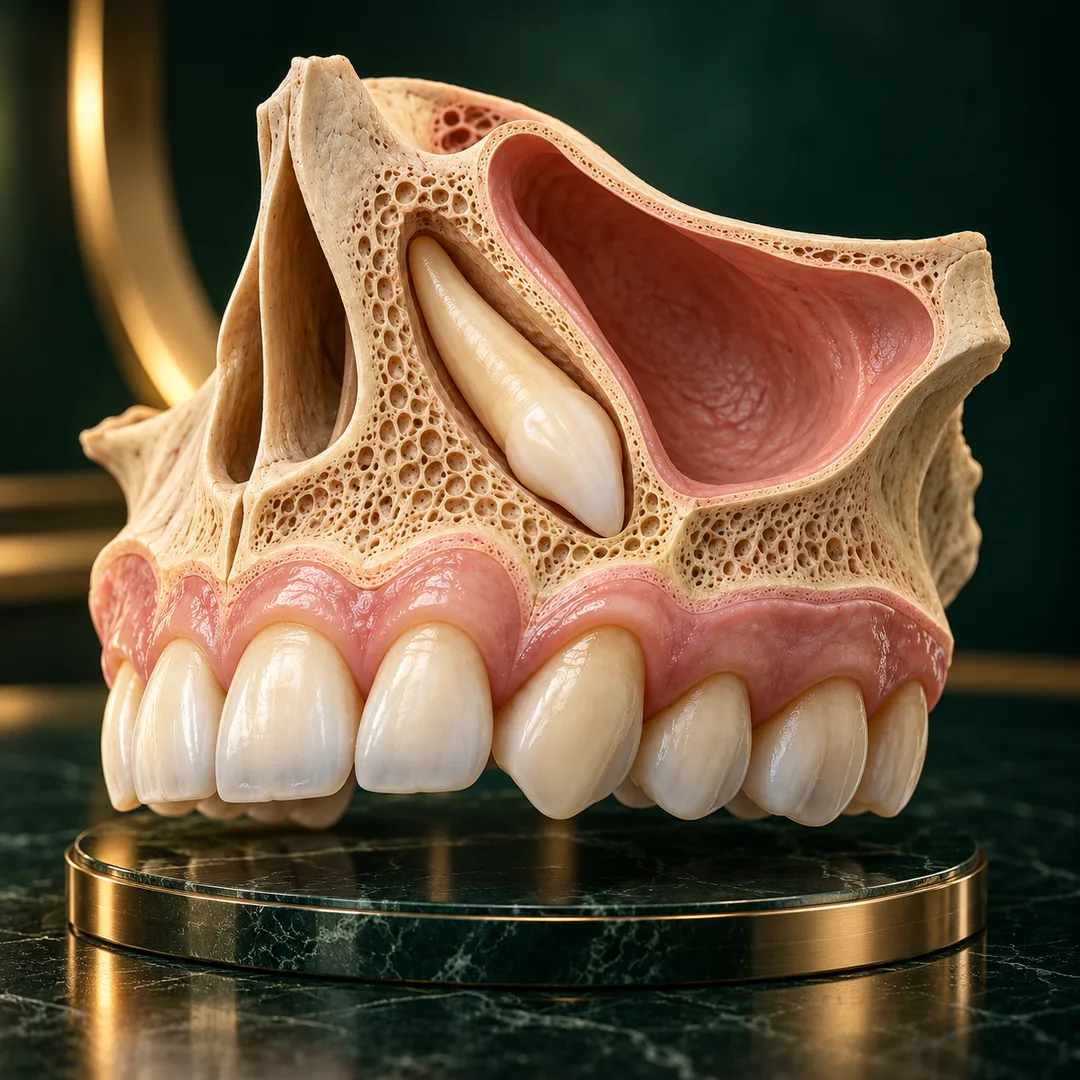
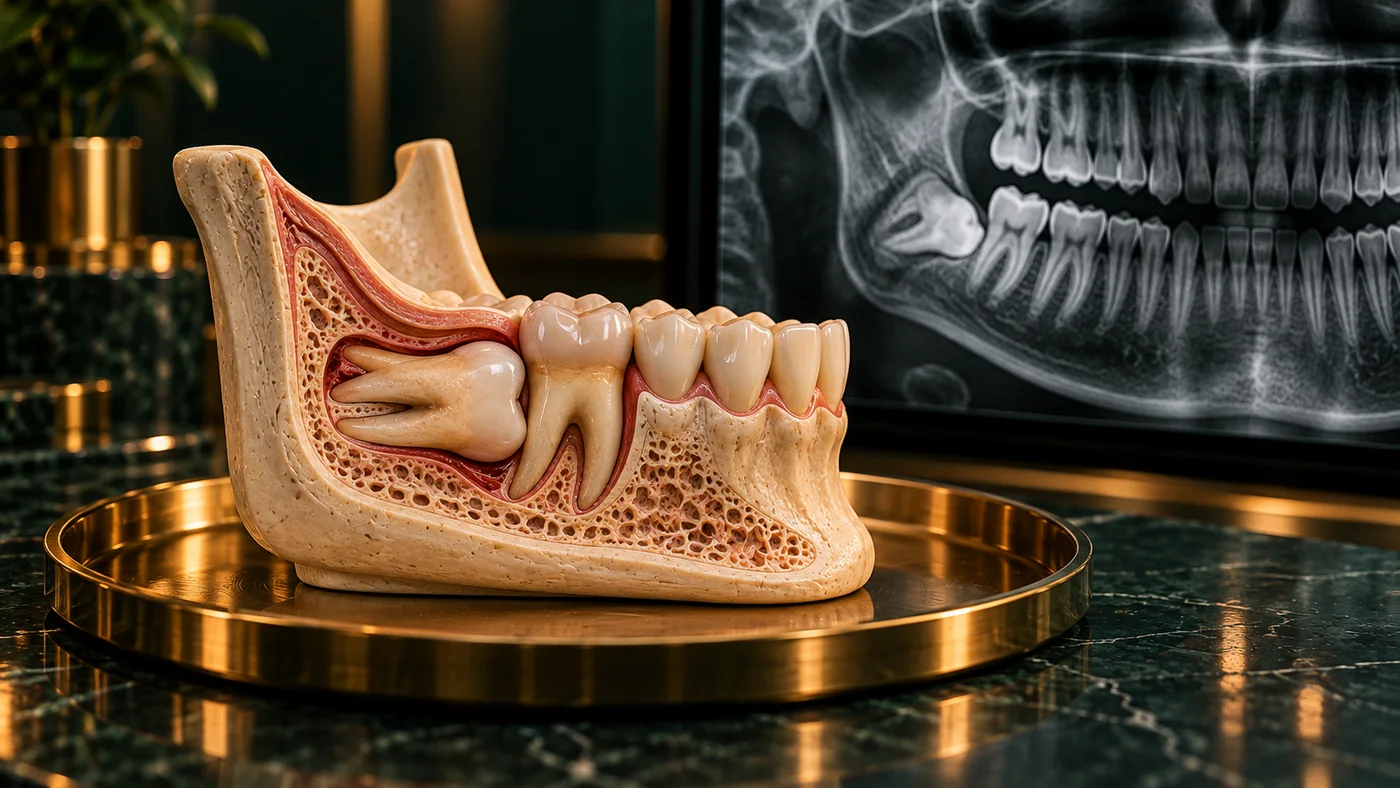
Many cysts originate from a tooth: a root with chronic infection (radicular cyst) or an impacted tooth, like a wisdom tooth, around which the cyst forms (dentigerous cyst).
Not all are the same, which is why studying them matters: the type of cyst defines the treatment and follow-up.
A bone cyst rarely hurts, and that's exactly why it shouldn't be ignored: treating it in time protects your bone and your teeth.
03Is it dangerous? What if it's not treated?
Most are benign, but they shouldn't be left alone. As it grows, a cyst can thin and weaken the bone, displace or damage neighboring tooth roots, and even favor a fracture or become infected.
Some bone lesions need more attention, so any finding should be assessed by a specialist in oral pathology.
04How is it treated?
The usual treatment is to remove the cyst completely (enucleation) and, importantly, send it for study to confirm its type. Depending on the case, the tooth that caused it is also treated.
It's planned with an X-ray, often 3D, to operate safely. Afterwards there's follow-up to confirm the bone regenerates well.
·Frequently asked questions
Is a jaw cyst cancer?
The vast majority of cysts are benign. Still, it's important to remove it and send it for study to confirm its type with certainty. That's exactly the reason for the analysis.
Why didn't it hurt if I had a cyst?
Because cysts usually grow slowly and painlessly. That's why most are discovered by chance on an X-ray taken for another reason.
What if I don't treat the cyst?
As it grows it can weaken the bone, damage neighboring tooth roots, favor a fracture or become infected. So it's worth treating even if it doesn't hurt.
How is a bone cyst removed?
Usually by enucleation (removed completely) and sent for study. It's planned with an X-ray, done under local anesthesia or as the case requires, and followed up.
Who treats an upper or lower jaw cyst in Cancún?
An oral and maxillofacial surgeon, a specialist in pathology of the facial bones. In Cancún you can be assessed by Dra. Jessica López.
Book your assessment in Cancún
Every case is different and deserves an assessment. Message me on WhatsApp: I reply personally and guide you with no obligation.
Book on WhatsApp