In short
- A mucocele is the most common cause of a lump on the lower lip or in the mouth.
- It appears when a small salivary gland is injured (by biting it, for example).
- It's not cancer and not contagious; it's usually painless.
- If it doesn't clear on its own or keeps returning, treatment is to remove it.
- Any lump that grows, hurts or won't heal deserves an assessment.
01What is a mucocele?
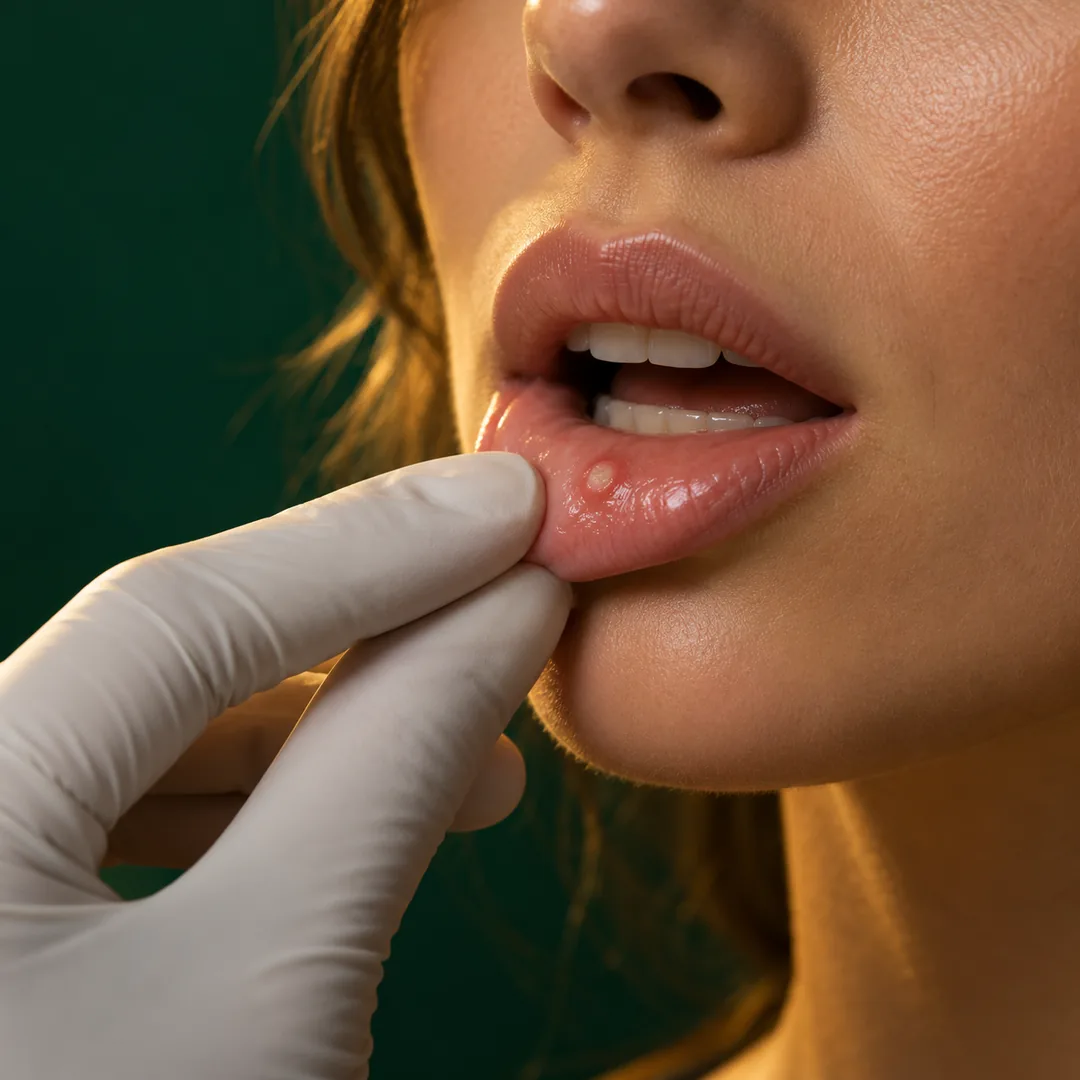
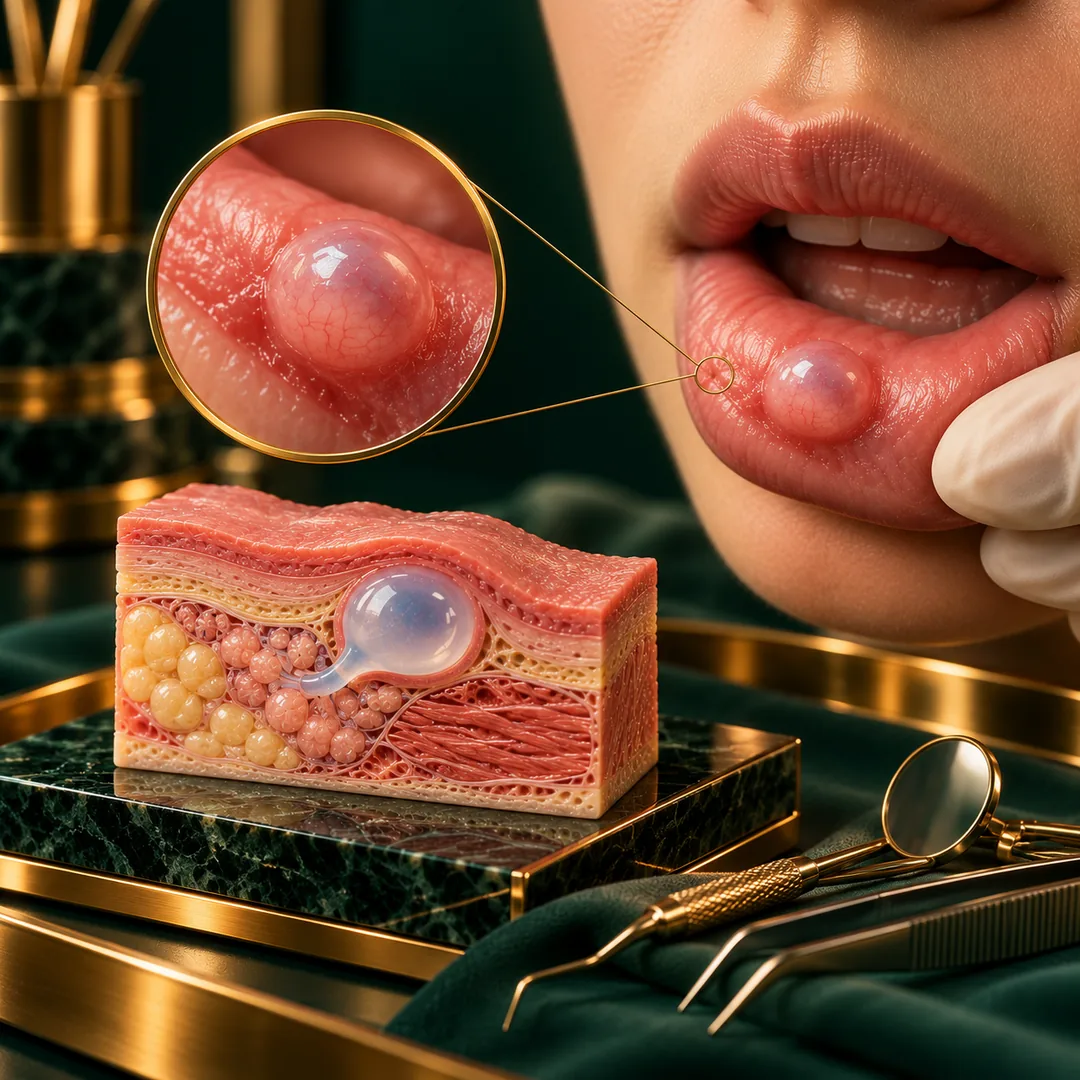
A mucocele is a small saliva “bubble” that forms when a minor salivary gland is injured or blocked, and saliva gets trapped under the lining. It's very common on the lower lip, but also on the inner cheek, tongue or floor of the mouth.
It looks like a rounded, soft, sometimes translucent or bluish lump. It can change size and may drain on its own, only to reappear.
02Why does it appear?
The most common cause is minor trauma: biting the lip, repeated rubbing or a light knock. That injures the gland's duct and saliva builds up.
It has nothing to do with hygiene and isn't contagious. It's simply a local reaction of a salivary gland.
Most lumps on the lip are benign mucoceles. What matters is checking them if they don't go away, to resolve them properly and with certainty.
03When should I get it checked?
A mucocele itself isn't dangerous. But a specialist should assess it if: it doesn't go away in two or three weeks, it grows, it bothers you when eating or speaking, or it keeps returning in the same spot.
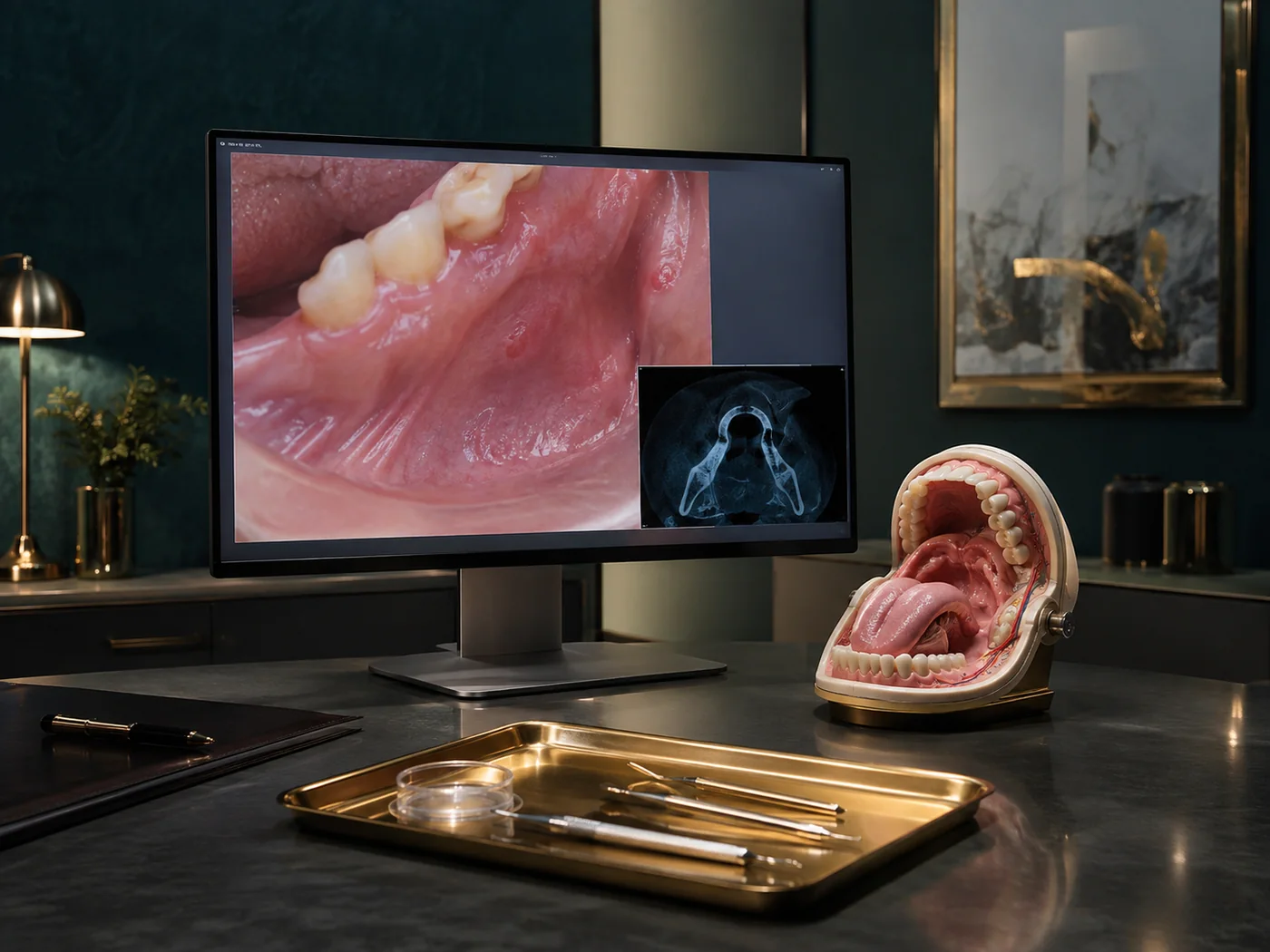
It's also important to rule out another type of lesion. For any lump that grows or won't heal, an oral pathology assessment gives peace of mind and a clear diagnosis.
04How is it removed?
The definitive treatment is removing the small affected gland, a simple procedure under local anesthesia. Draining only the “content” usually doesn't work, because the gland keeps collecting saliva.
When indicated, the sample is sent for study to confirm the diagnosis. Recovery is fast and discomfort is minimal.
·Frequently asked questions
Is a mucocele dangerous or cancer?
No. A mucocele is a benign lesion from trapped saliva —not cancer, not contagious. Still, any lump that grows or won't heal should be assessed to confirm the diagnosis.
Does it go away on its own?
Sometimes, especially small ones. But it often returns in the same spot. If it doesn't clear or keeps coming back, the definitive treatment is to remove it.
Can I pop it myself?
Not advisable. Popping it usually makes it refill and can cause infection. It's best to have it assessed and, if appropriate, removed properly.
Does removing it hurt?
It's done under local anesthesia, so there's no pain during the procedure. Recovery is quick and any afterwards discomfort is mild.
Who do I see for a lump in the mouth in Cancún?
An oral and maxillofacial surgeon, a specialist in mouth pathology. In Cancún you can be assessed by Dra. Jessica López.
Book your assessment in Cancún
Every case is different and deserves an assessment. Message me on WhatsApp: I reply personally and guide you with no obligation.
Book on WhatsApp