In short
- A torus is a benign bony growth, not a tumor or cancer.
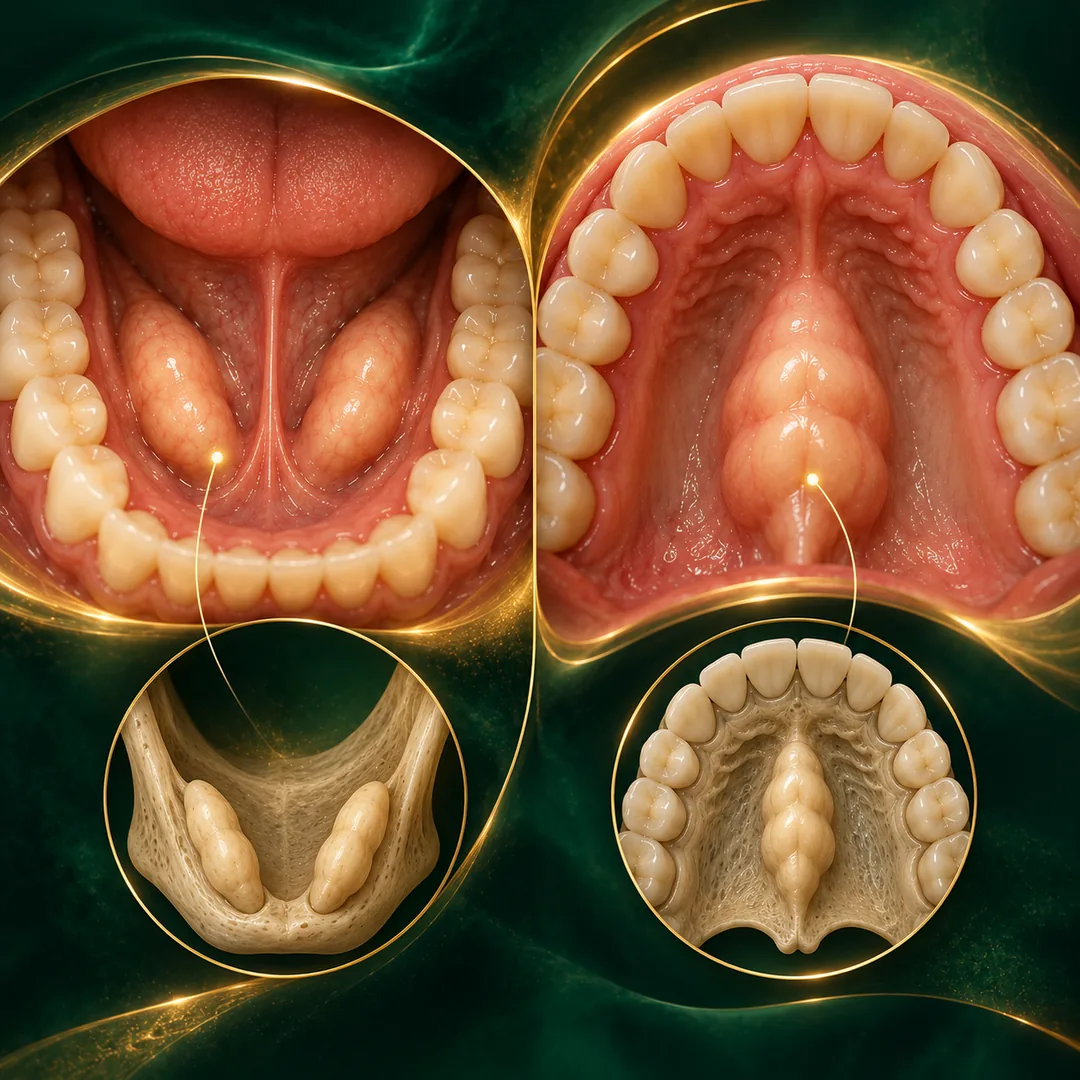
- The palatal one is in the middle of the palate; the mandibular one is inside, near the tongue.
- It's very common and usually painless; many people live with it with no issue.
- It's only removed if it blocks a denture, ulcerates or bothers eating or speaking.
- When it must be removed, it's a simple procedure under local anesthesia.
01What is a torus?
A torus (bony torus) is a growth of bone covered by normal gum. The palatal torus appears along the midline of the palate; the mandibular torus on the inner side of the lower jaw near the tongue, often on both sides.
It's benign, very common and multifactorial (genetics play a role, and sometimes clenching). It doesn't turn into cancer.
02Is it dangerous?
No. A torus is entirely benign. What tends to alarm people is discovering “a bone that wasn't there before” or feeling it with the tongue, but it isn't a risk in itself.
Still, any lump in the mouth that grows quickly, hurts, bleeds or changes is worth an assessment to confirm it's indeed a torus and nothing else.
A torus is almost never a problem. The right question isn't “is it dangerous?” but “is it getting in the way of anything?”.
03When is it removed?
Most tori don't need treatment. Removal is considered only when: it gets in the way of a denture or prosthesis, the covering tissue is frequently injured or ulcerated, it makes eating or speaking difficult, or it traps food and makes hygiene hard.
The decision is always individual: if it doesn't bother you, the sensible choice is usually to leave it and monitor it.
04What is the surgery like?
When indicated, removing a torus is a simple oral surgery procedure: under local anesthesia, the excess bone is reduced and the gum is repositioned. Recovery is usually a few days with simple care.
As a maxillofacial surgeon, I plan the case to operate safely and comfortably, especially when the torus is large or a prosthesis is planned.
·Frequently asked questions
Is a torus cancer or can it become cancer?
No. A torus is a benign bony growth and doesn't turn into cancer. Still, if a lump in the mouth grows fast, hurts or bleeds, it's worth assessing to confirm the diagnosis.
Do I have to remove my torus?
Not necessarily. Most don't need treatment. It's only removed if it blocks a denture, gets injured often or bothers eating or speaking.
Why did I get a torus?
Its origin is multifactorial: genetics play a role and, in some cases, clenching or grinding. It isn't due to poor hygiene or a serious disease.
Is torus surgery complicated?
It's a simple procedure under local anesthesia. Recovery is usually a few days. Large tori are planned carefully for comfort.
Who assesses a torus in Cancún?
An oral and maxillofacial surgeon, who confirms the diagnosis and decides whether removal is worthwhile. In Cancún you can be assessed by Dra. Jessica López.
Book your assessment in Cancún
Every case is different and deserves an assessment. Message me on WhatsApp: I reply personally and guide you with no obligation.
Book on WhatsApp