In short
- A supernumerary is an extra tooth, beyond the normal number.
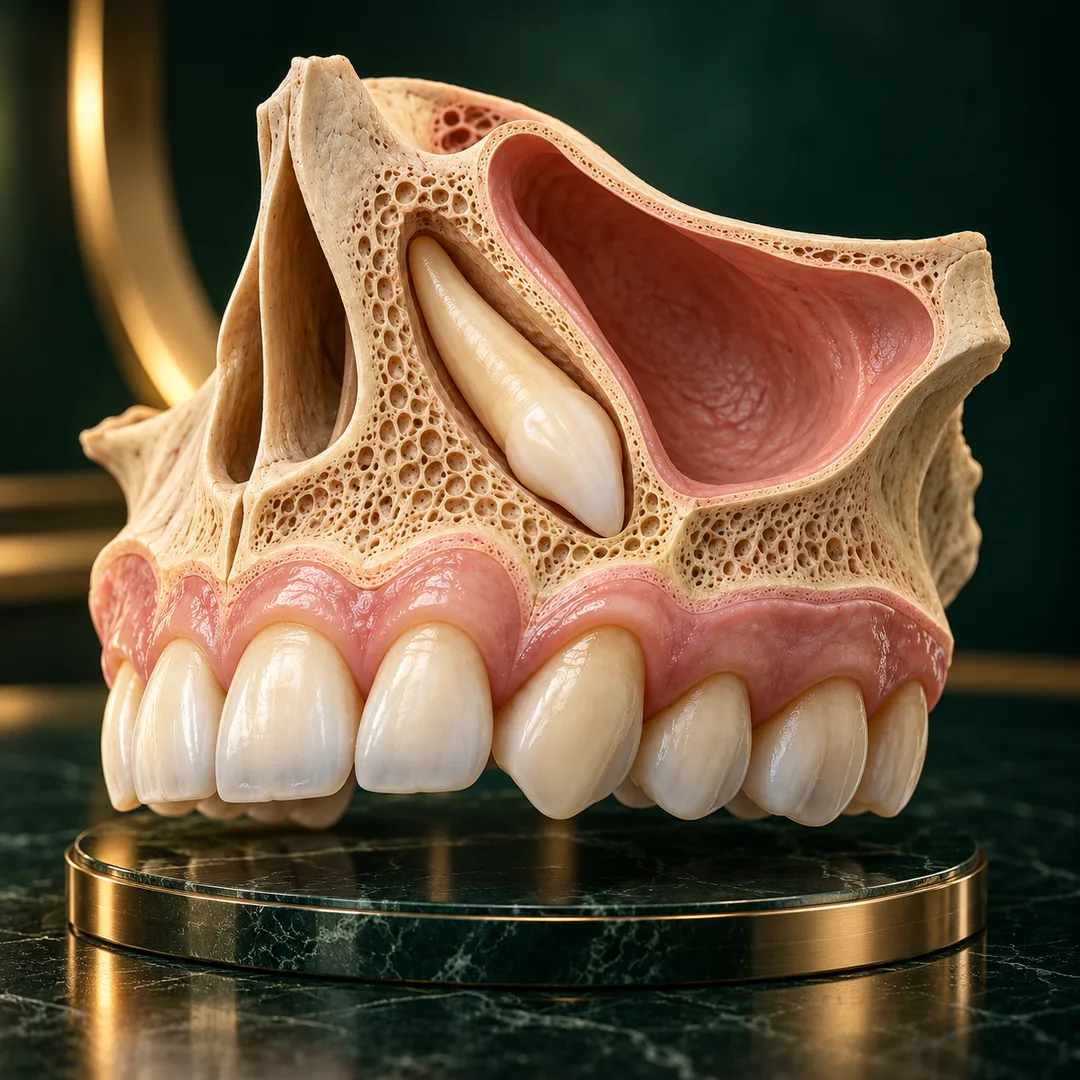
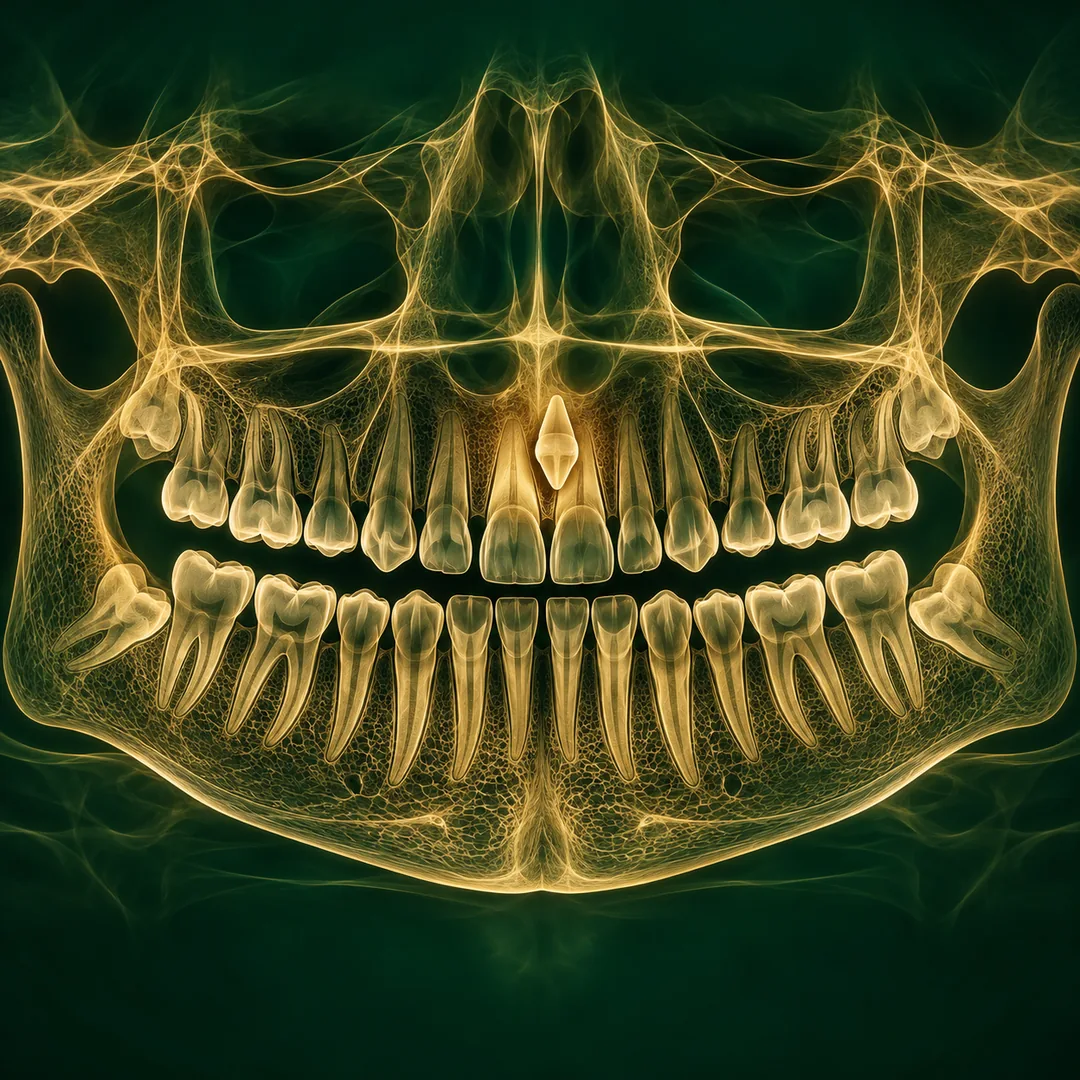
- The mesiodens appears between the two upper front teeth.
- It can block a permanent tooth or leave a gap (diastema).
- It's usually found on an X-ray, often in children.
- The usual treatment is removal with careful planning.
01What is a supernumerary tooth?
It's a tooth that forms in excess, beyond the normal count. It may be erupted or, most commonly, remain impacted in the bone. The most frequent type is the mesiodens, in the midline between the two upper central incisors.
Supernumeraries occur in other areas too. Their shape is often small or atypical.
02Why does it matter?
A supernumerary can cause several problems: block a permanent tooth from erupting, push it out of position, leave a gap between the front teeth (diastema), or be linked to cysts. It's often discovered precisely when investigating why a tooth “won't come in”.
So even if it doesn't hurt, it's worth assessing: catching it early prevents longer orthodontic treatment.
Sometimes the reason a front tooth “won't come in” is another hidden tooth. Seeing it in time saves years of orthodontics.
03How is it detected?
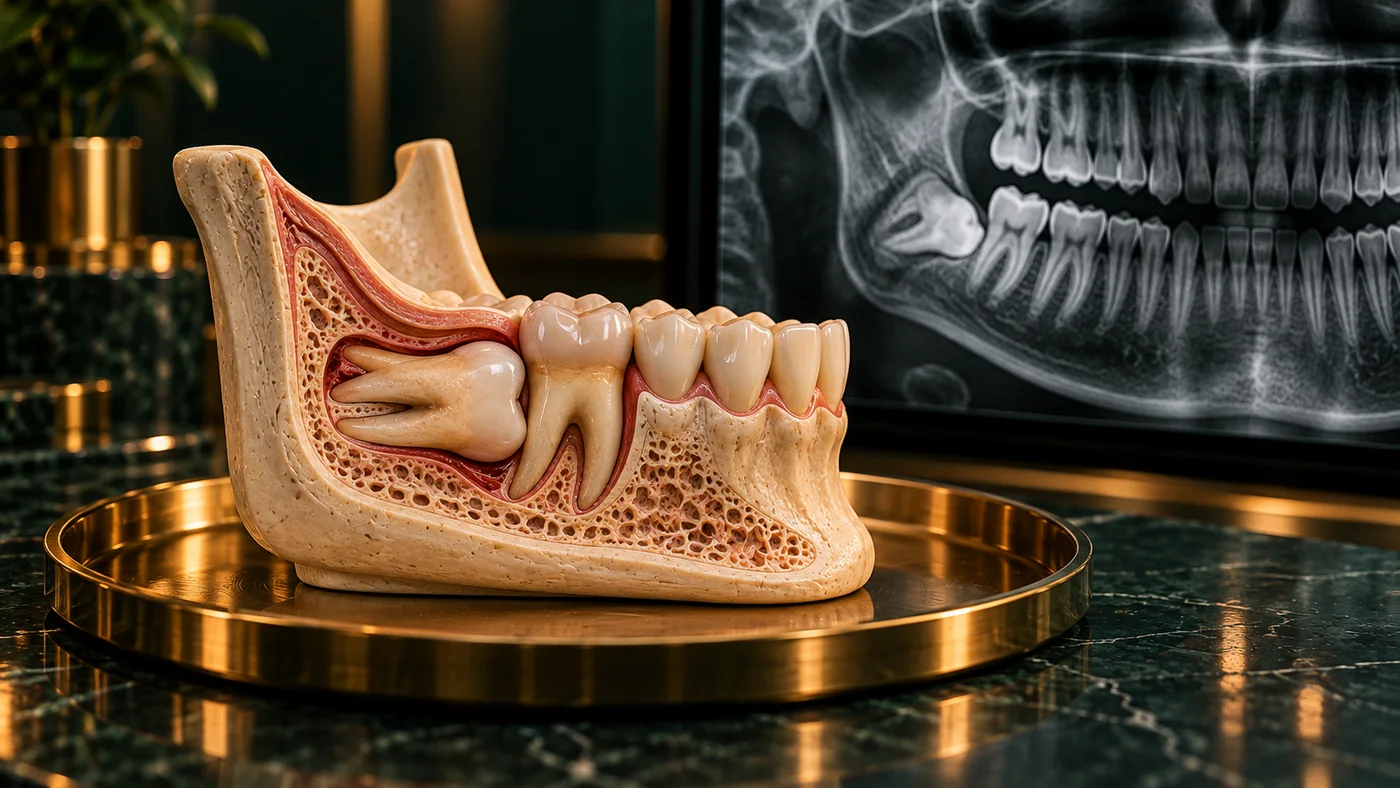
Usually on an X-ray, often during a child's orthodontic assessment or when studying an impacted tooth. The image shows its exact position and relationship to neighboring teeth.
It's the same principle as any impacted tooth: imaging planning defines the best plan.
04When and how is it removed?
The usual treatment is removal, especially if it's blocking a permanent tooth or causing problems. The timing is decided by age and case, together with the orthodontist when appropriate.
It's an oral surgery procedure planned with an X-ray, under local anesthesia and with simple recovery.
·Frequently asked questions
Are all supernumerary teeth removed?
Not always, but it's the most common course, especially if they block a permanent tooth, displace teeth or are linked to cysts. The X-ray and the case define the timing.
What is a mesiodens?
It's the most common supernumerary: an extra tooth in the midline, between the two upper central incisors. It's usually impacted and found on an X-ray.
At what age is it treated?
It depends on the case. It's often detected in childhood when assessing why a tooth won't erupt, and the timing of removal is planned with the orthodontist.
Is it dangerous to leave a supernumerary tooth?
It can block a permanent tooth, push the front teeth apart or be linked to cysts. So even if it doesn't hurt, it's worth assessing.
Who removes a supernumerary tooth in Cancún?
An oral and maxillofacial surgeon, who plans it with an X-ray and works with your orthodontist. In Cancún you can be assessed by Dra. Jessica López.
Book your assessment in Cancún
Every case is different and deserves an assessment. Message me on WhatsApp: I reply personally and guide you with no obligation.
Book on WhatsApp